How we made our AI fix its own bugs
The self-healing loop we run in production: error signals, an applicability review, a patch in an isolated worktree, a real smoke test, a gated merge and a memory update.
Agent engineering, about 8 minutes to read
Production systems, real failure modes and working code, from the team that builds the tooling and runs it for clients.
The self-healing loop we run in production: error signals, an applicability review, a patch in an isolated worktree, a real smoke test, a gated merge and a memory update.
Agent engineering, about 8 minutes to read
How AI agents mishandle provider API keys, what encrypted storage looks like, and the two key models, your own keys or managed ones, that we run in production.
AI agent security, about 7 minutes to read
Train a LoRA on your own photos on our GPU and generate consistent on-brand images in any scene, without sending your photos to a third-party cloud.
AI image generation, about 7 minutes to read
How to run real operations on Telegram: bots, approval flows, Mini Apps, group automation and always-on agents on Fly.io.
Telegram automation, about 8 minutes to read
The extract-then-store bug makes AI memory save questions as facts. The four speech acts that leak in, and the one-conditional gate that keeps them out.
AI memory reliability, about 6 minutes to read
Binary AI memory treats every row as true with confidence 1.0. Model facts as Beta beliefs instead: start unsure, earn trust through repetition, fade over time.
AI memory reliability, about 6 minutes to read
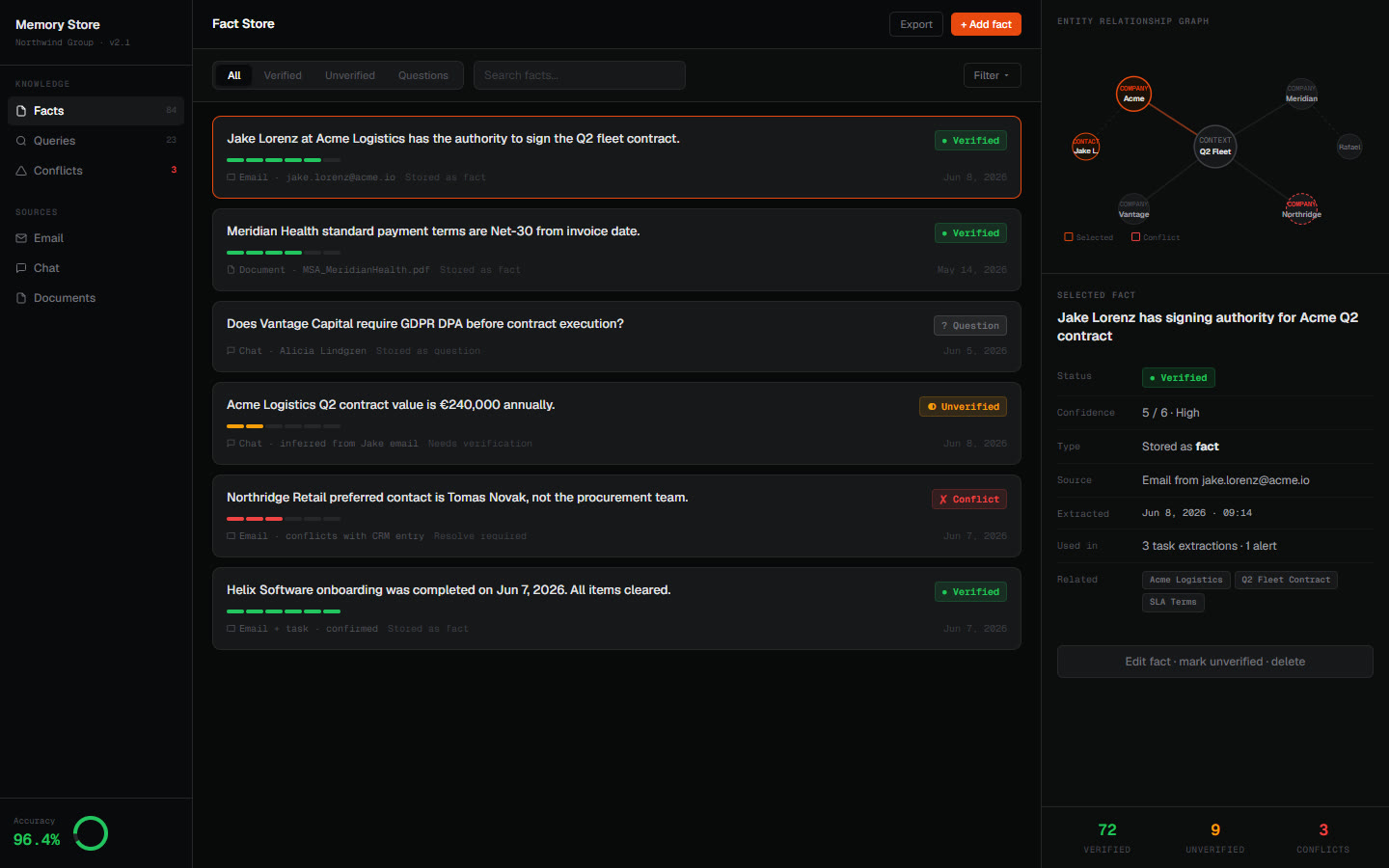
The gate from our memory posts took a client's memory precision from about 35% to 100% on their labelled test set.
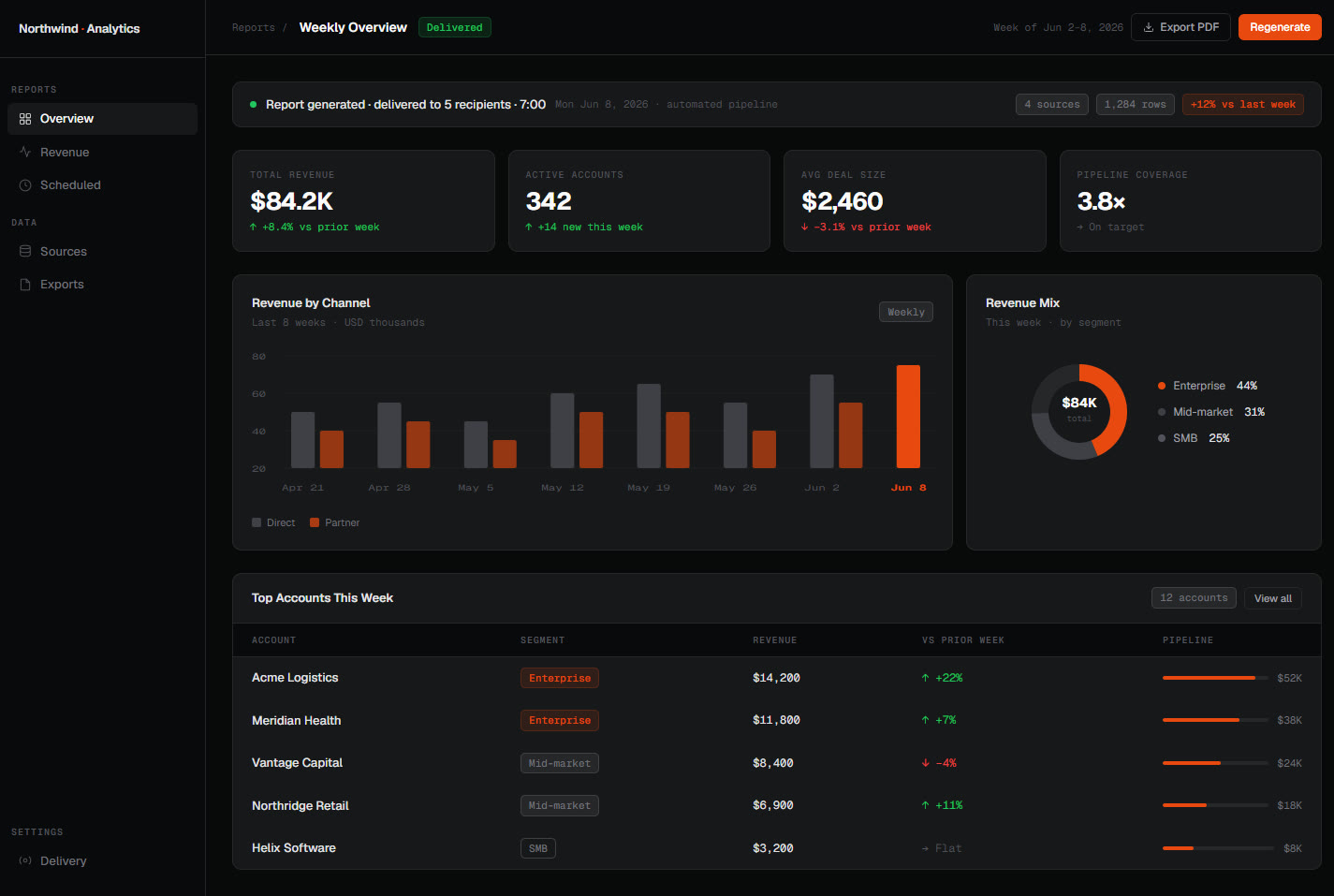
Telegram approval flows in daily use: every CRM change waits for a manager's yes in the chat.
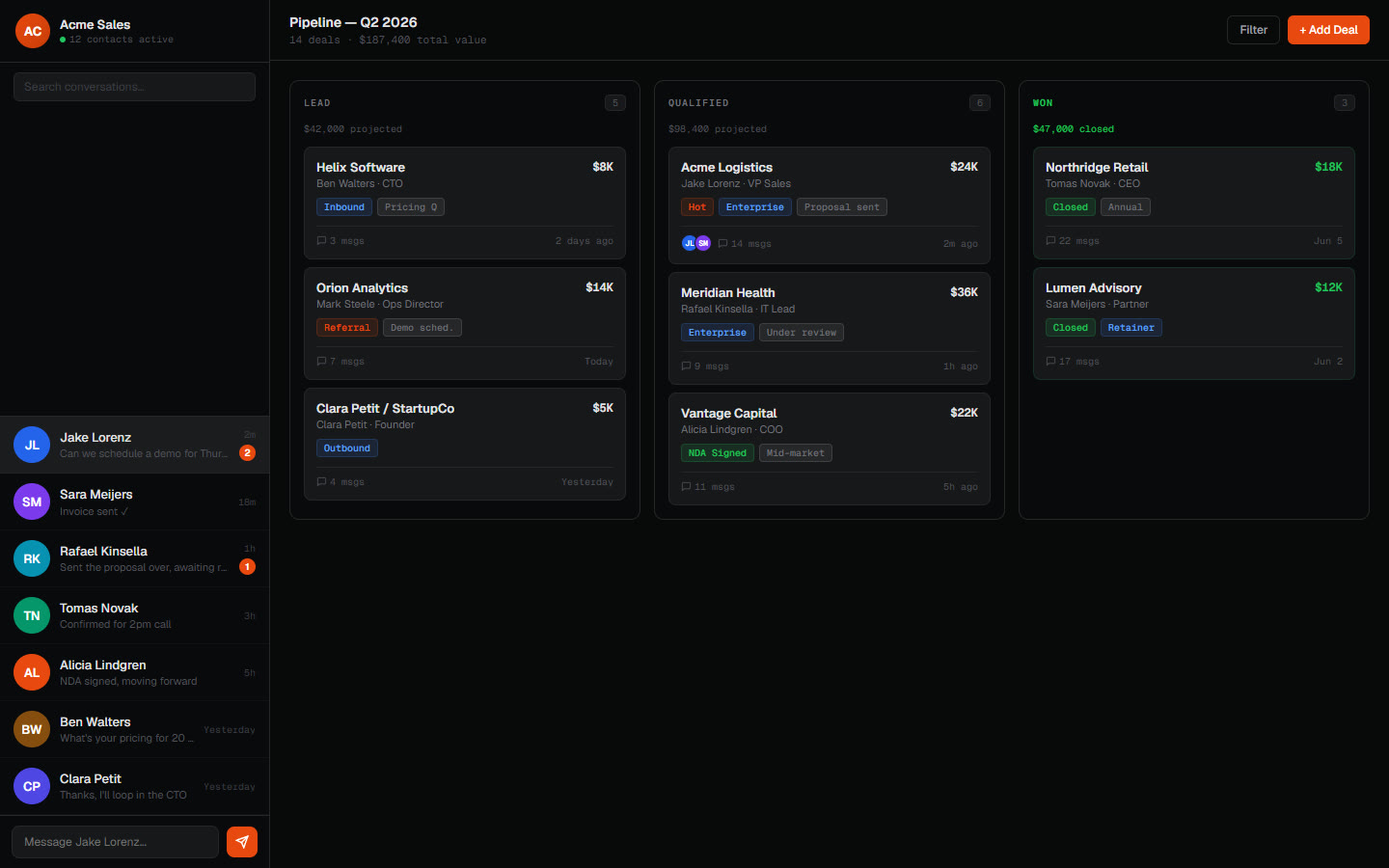
Contacts, a pipeline and monitoring inside Telegram, on the client's own API keys or keys we manage.
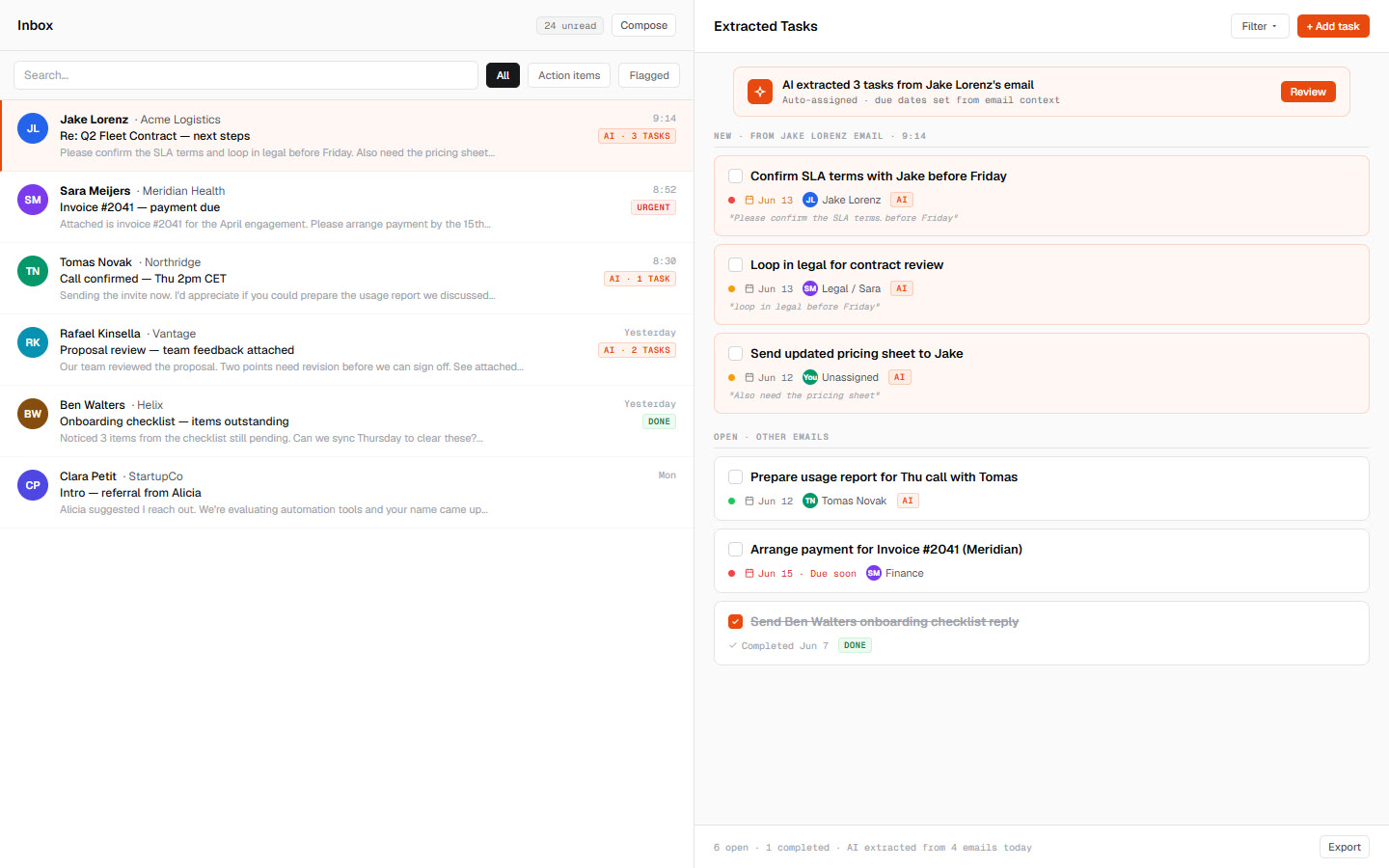
A memory gate keeps its facts and commitments clean, and questions and noise stay out.
AI workers trained on your process, running on the self-healing loop and the memory gate we write about.
Bots, approval flows, Mini Apps and always-on agents, the patterns from our Telegram post.
Launch copy, visuals and a social set made with AI, checked against your brief before anything ships.
We wire the tooling we write about into production systems, starting with a free audit of how your work runs today.