Skip to content
Work we've shipped

Five things an AI-run company actually shipped.

Problem, build, result. No illustrative placeholders — these run in production. The work below isn't a portfolio we're describing from the outside. It's the company describing what it does, by doing it to itself first.

Affiliate-marketing CRM

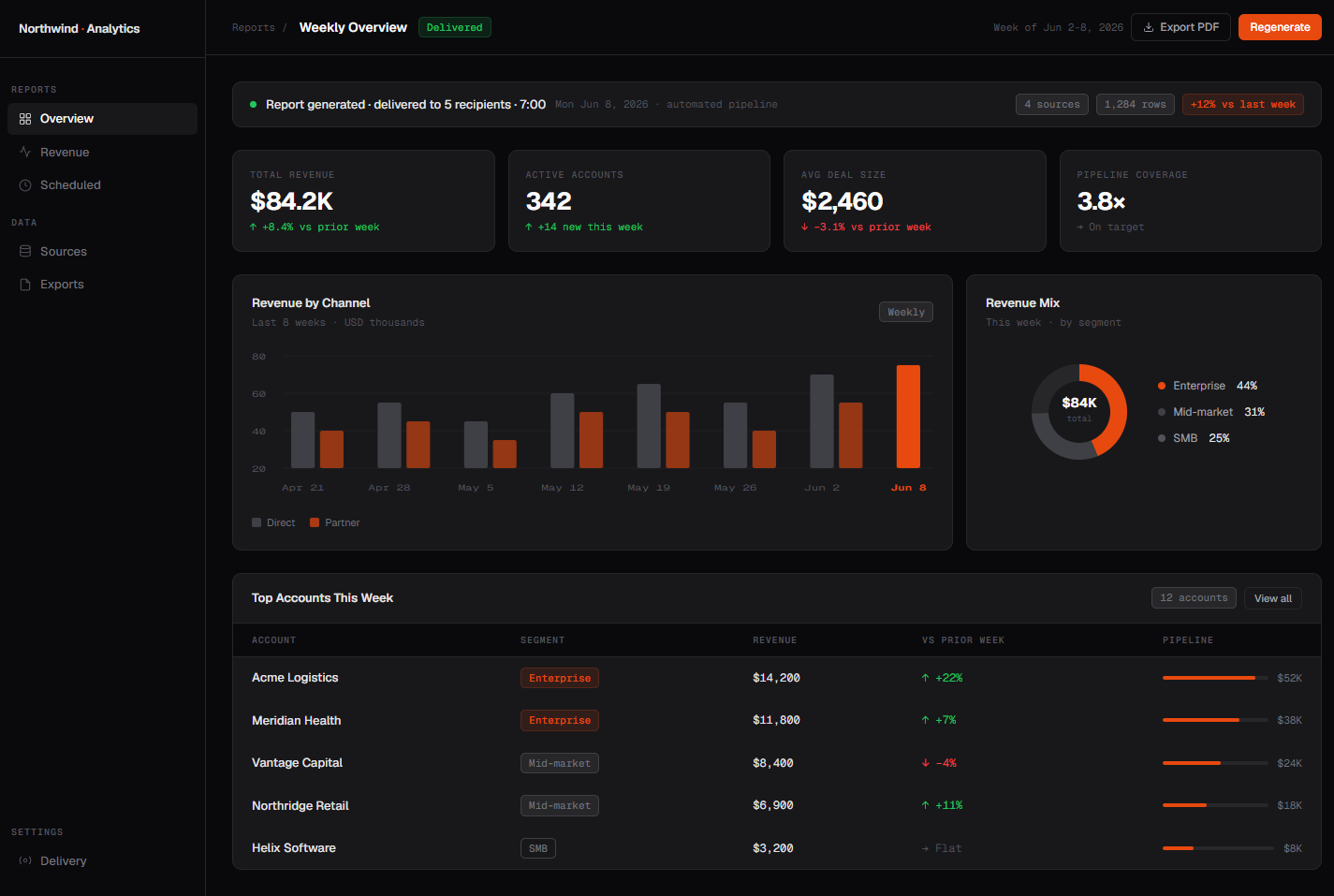
The report that writes itself before the team logs in

Workflow Automation
Problem

Every morning someone opened the iREV CRM, pulled reports per client, eyeballed funnels, screenshotted spreadsheets, and pasted them into a digest. Hours of copy-paste. Worse, when a lead API silently broke, nobody knew until a client noticed — sometimes a full day later.

Build

An automated pipeline pulls the daily iREV reports on a schedule, analyzes each funnel, and assembles a per-client "report card" written for the client. Delivery runs through Nina into Telegram. The same pipeline watches the lead and API layer in real time and alerts the moment an endpoint errors.

Result

The morning copy-paste-and-screenshot ritual is gone. Client-ready report cards land before the team is at their desks, every day. Manual lead-checking hours go to zero, and a broken API surfaces in minutes instead of a lost day of revenue.

We didn't speed up the morning report. We deleted it from the to-do list.
Crowork — first-party

Nina: the employee who never logs off

AI Employee
Problem

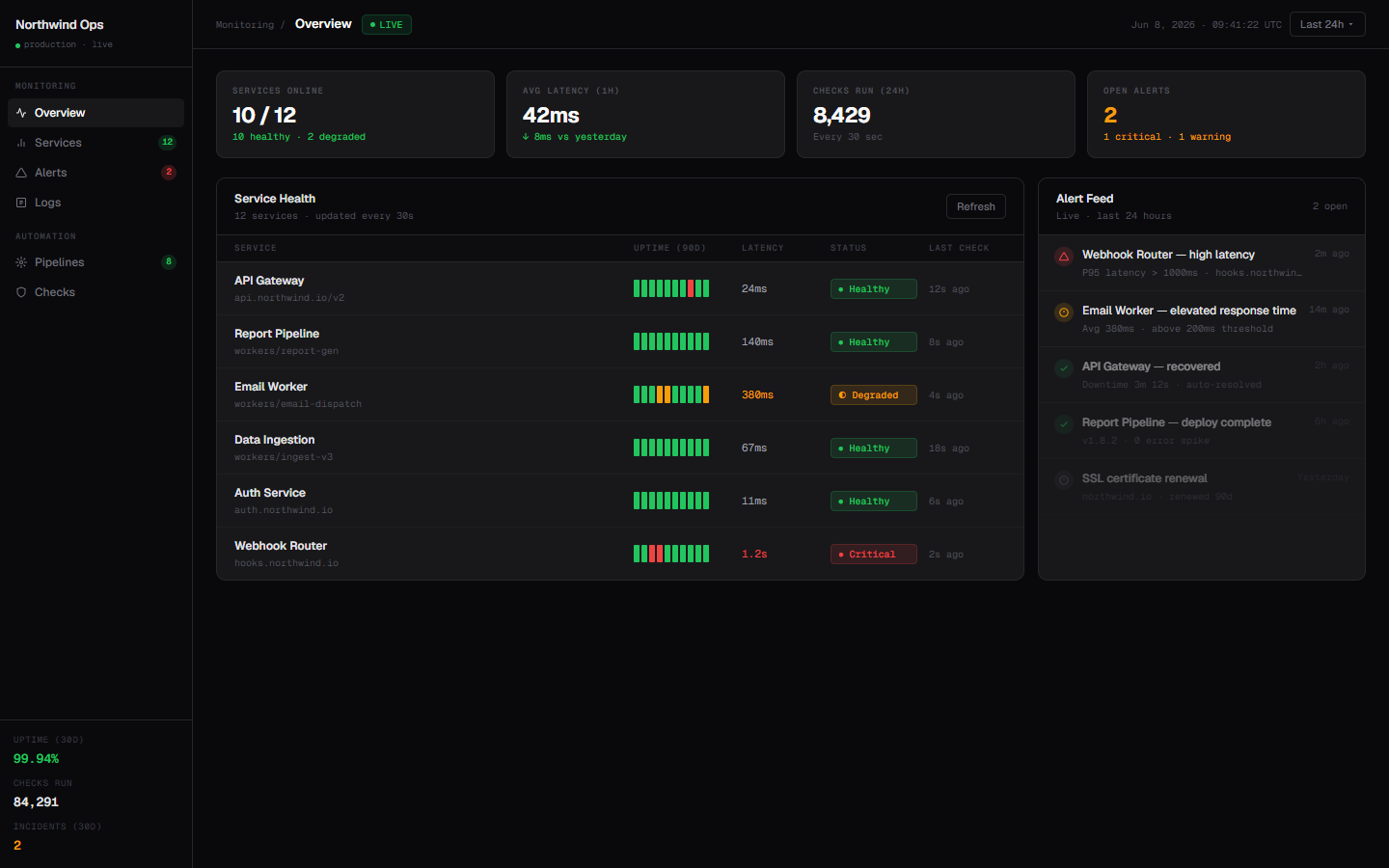
Operations don't keep office hours. Reports need to go out, alerts need to fire, errors need a response at 3am and on Sunday. Hiring around the clock is impossible for a lean team — so things get missed in the gaps.

Build

Nina, an always-on AI employee that lives in Telegram over MTProto, so she works like a real account, not a bolted-on bot. She delivers the daily digests, runs live alert checks every five minutes, and nudges the team the instant something errors.

Result

The work that used to require a person watching dashboards now has a worker assigned to it permanently — no shifts, no gaps. Five-minute monitoring coverage, 24/7. The same role a human ops hire would do, at a flat subscription instead of a salary.

We don't sell chatbots. We ship employees. Nina is the proof you can put on a payroll.
Crowork — first-party

Muninn: an inbox that turns into a to-do list by itself

AI Integration
Problem

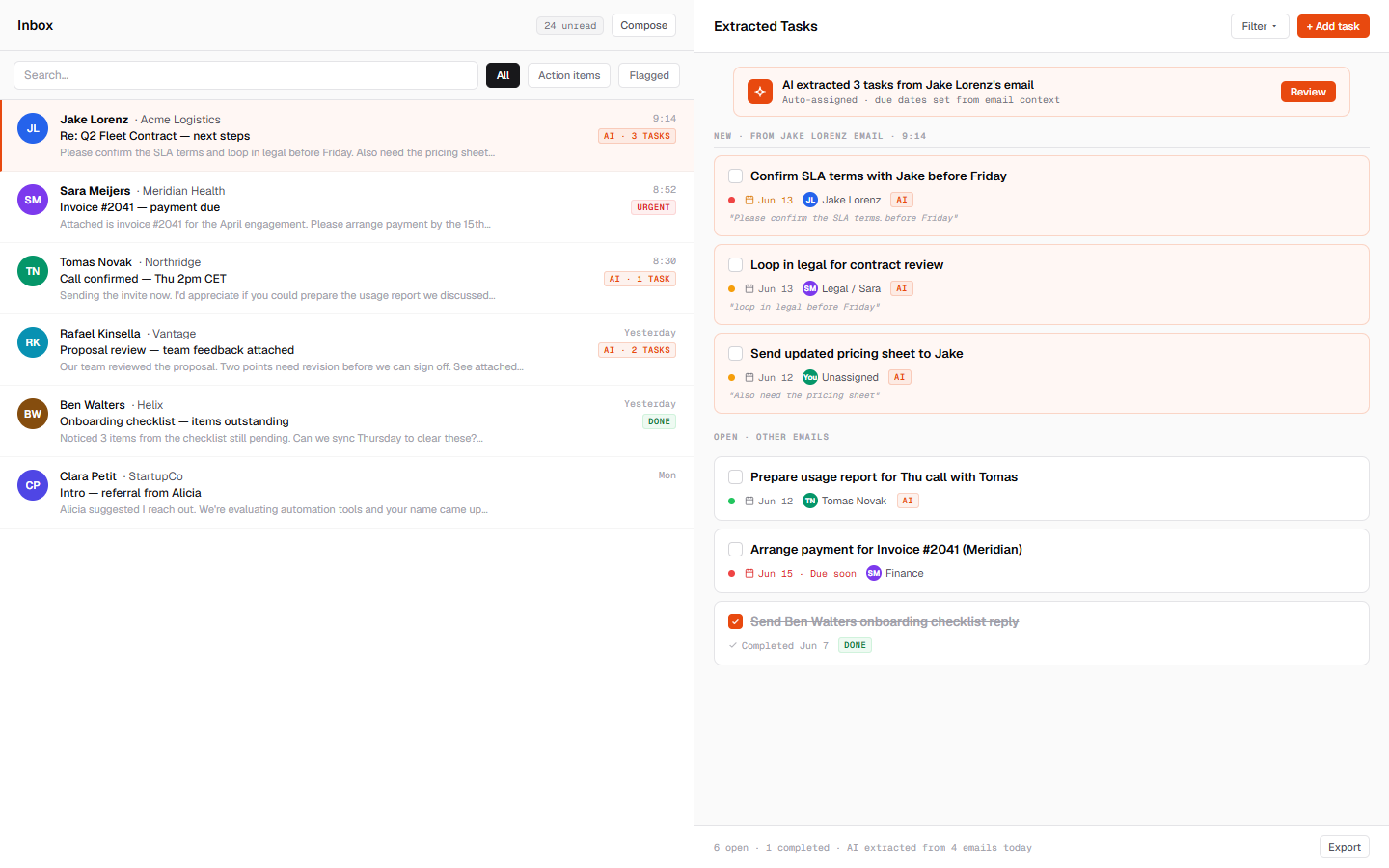
A busy operator drowning in email, tasks scattered across apps, calendar and reminders living in someone's head. Important things slip not because nobody cares, but because nothing connects the inbox to the action.

Build

Muninn, a multi-user assistant on Telegram with persistent memory. It reads incoming email and turns the actionable ones into real Google Tasks automatically — invoices, lawyer and accountant emails, school notices. It manages the calendar, fires reminders that actually exist, and runs research on demand. It runs on a Claude subscription, not metered per-token billing, so cost stays stable — and it's a closed, supervised system, not an open agent framework.

Result

Email stops being a backlog and becomes a task queue that fills itself. Reminders the system claims are set are actually set — "done means done" is enforced, not assumed. One assistant covers triage, tasks, calendar, and research.

Most "AI assistants" answer questions. This one closes loops while you sleep.
SMBs on Telegram

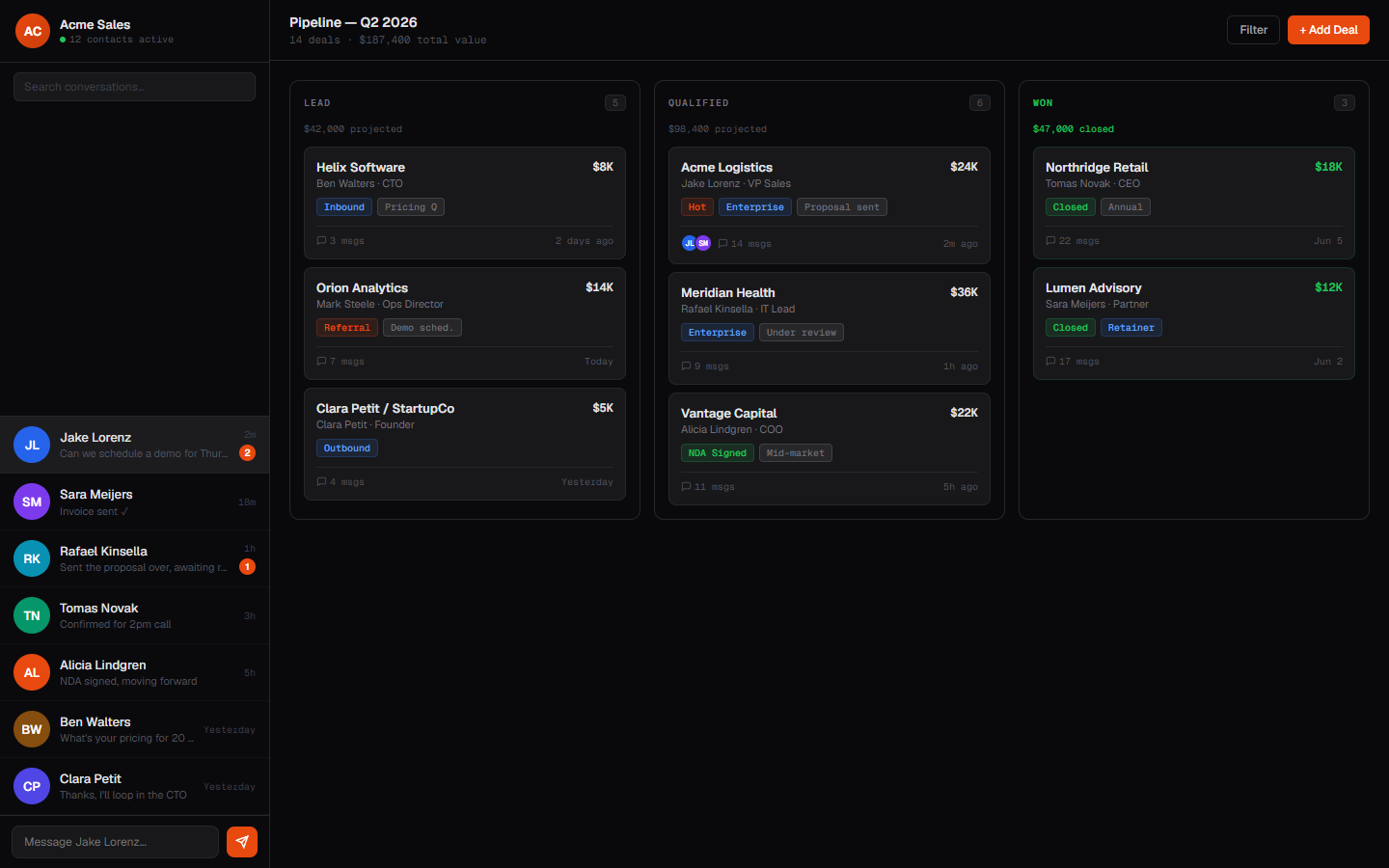
CRgraM: your Telegram chats were already a CRM

Custom Build
Problem

For a huge number of SMBs, the entire customer relationship lives in Telegram DMs — deals, support, leads, follow-ups, all scattered across threads with no pipeline. Buying a traditional CRM means dragging the team off the platform they already use. They won't, so they don't.

Build

CRgraM, a Telegram-native CRM built on MTProto. Instead of forcing customers into a separate system, it turns the Telegram chats they already run into a structured CRM — contacts, pipeline, and follow-up tracking inside the tool the business already lives in.

Result

SMBs get CRM discipline without the migration that kills CRM adoption. The pipeline lives where the conversations already happen, so it actually gets used — the rarest and most valuable property a CRM can have.

The best CRM is the one your team doesn't have to be talked into opening.
Open source · Apache-2.0

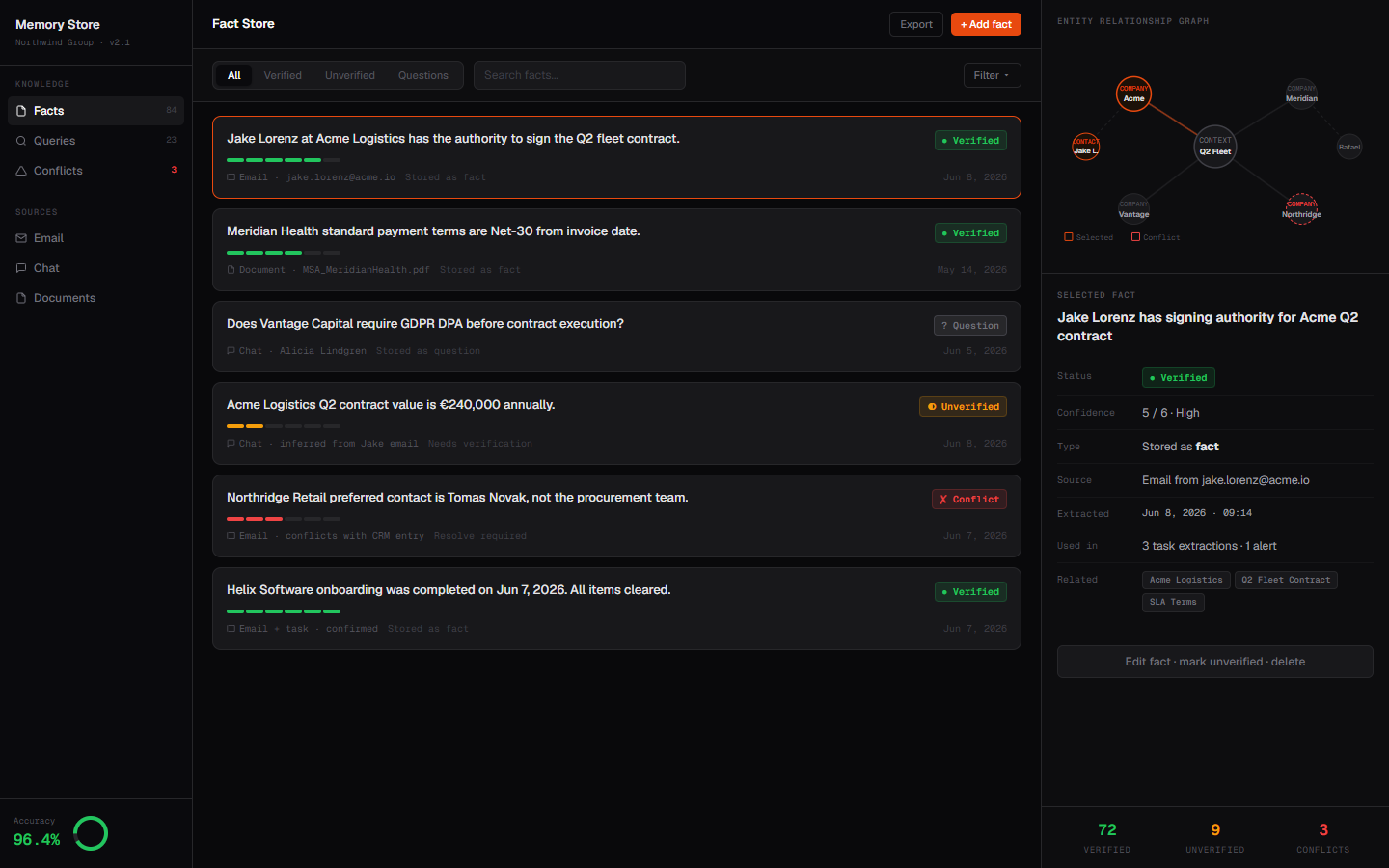
The memory gate that knows a question from a fact

Engineering Proof
Problem

Every AI agent with memory has the same quiet bug: it stores the wrong things as truth. A user asks "Do I have a meeting Friday?" and the agent files "user has a meeting Friday" as a fact. Commands, hypotheticals, sarcasm — all written to memory as gospel. In one production system, this corruption hit health-record data.

Build

speech-act-memory-gate — an open-source (Apache-2.0) ingest gate that sits in front of any AI memory layer and decides what's actually a fact versus a question, command, or hypothetical. A drop-in: a few columns and one function call. It pairs with a confidence model so facts carry doubt, gain certainty when restated, and decay when stale.

Result

On SpeechActMemBench, the gate moved fact-storage precision from a baseline of 35.2% to 100% — it stops storing the garbage that poisons agent memory while keeping the real facts. It's public on GitHub, with the benchmark you can run yourself.

Precision 35.2% → 100% on SpeechActMemBench
One mention is not a fact. We built the gate that knows the difference — and gave it away.

View the repo on GitHub

The thread running through all five

Crowork is a company run by AI — these systems were built and are operated by the same AI workforce we deploy for clients, supervised by a human who signs off on what ships. This website is itself run by AI: it publishes the blog, watches the traffic, and updates its own content.

We don't sell chatbots. We ship employees, automations, and AI built into the tools you already use.

Want this kind of work in your operation?

Bring us the work you wish you'd never have to do again. In one session we'll show you what we'd automate first.