A CRM built inside Telegram for a chat-run SMB
Contacts, pipeline, and monitoring — structured into the chat app they already run their business in, with no change to how they work.
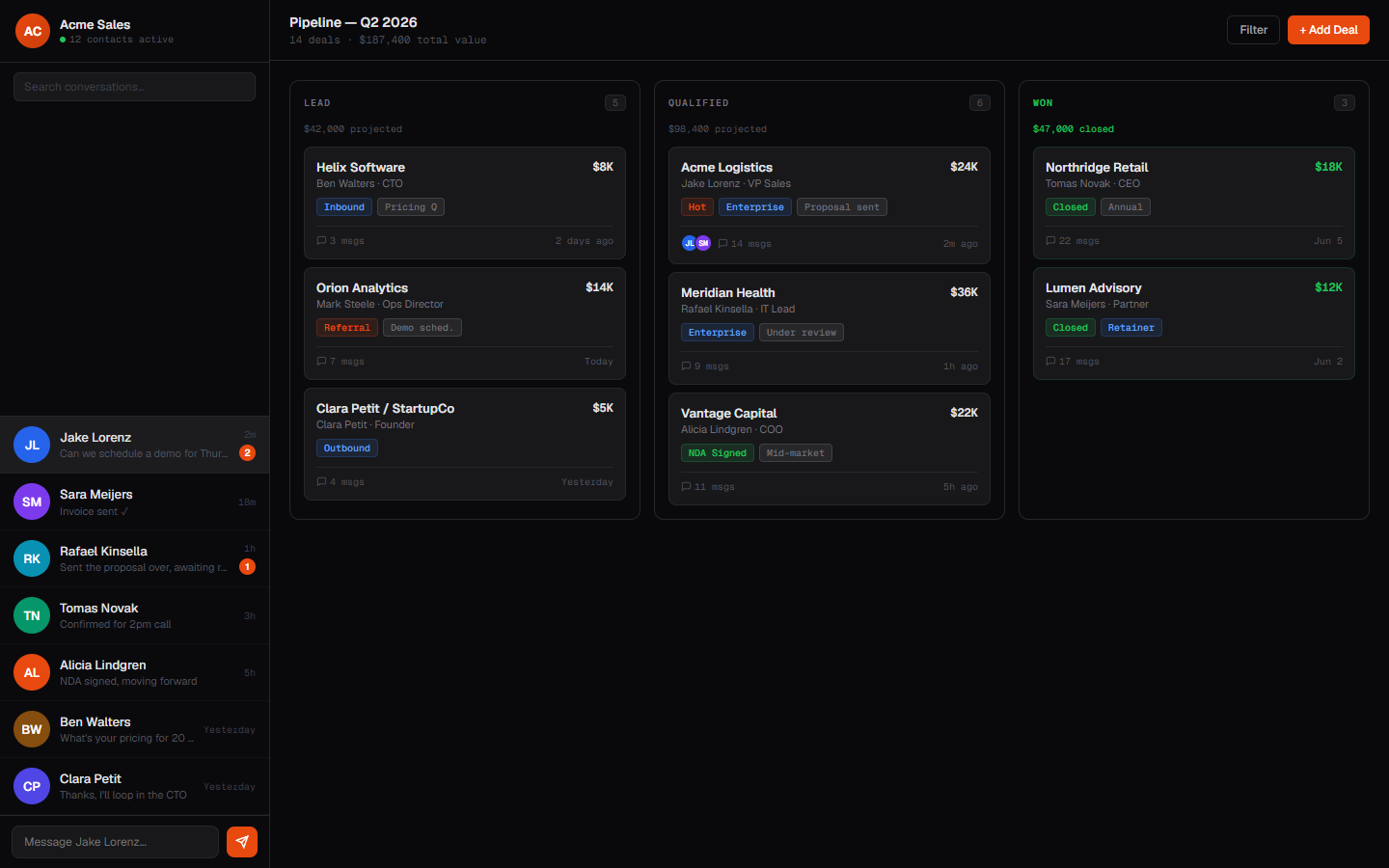
The problem
An SMB ran its business almost entirely over chat. Deals, contacts, and the state of every conversation lived scattered across personal threads. There was no pipeline, no single source of truth, and no way to see the state of the business at a glance.
But the team also was not going to abandon the chat-first way of working that made them fast in the first place. Whatever the solution was, it could not ask them to change how they operated.
Before
- Deals lost in personal chat threads
- No pipeline visibility
- Contacts scattered, no source of truth
- No way to see business state at a glance
After
- Contacts structured, always findable
- Real pipeline with tracked deal stages
- Business state visible at any moment
- Same chat app — nothing new to learn
Our approach
Instead of forcing them into a traditional CRM, we built the CRM into the place they already worked. The constraint was explicit: do not change how they operate.
Capture the structure that a CRM provides — contacts, pipeline, monitoring — behind the conversational surface they already use, so the discipline comes for free without anyone having to adopt a new habit.
"The best integration is invisible. Adoption is where most CRM projects die."
What we built
A structured CRM living inside their existing chat — powered by Telegram MTProto, deployed on Fly.io, GDPR-compliant with EU data residency.
- Contacts captured and organized from the conversations themselves
- A real pipeline — deal stages tracked, not lost in scrollback
- Monitoring and status surfaced in the same chat they already watch
- No new tool to adopt and no behavior change required of the team
- BYOK or managed-key options — API credentials never stored in plaintext
The result
The team kept working exactly as they had, and got a structured CRM out of it. Contacts and deals stopped living in scattered personal chats; the state of the business became something they could actually see.
Nobody had to learn a new system, because there was no new system — just structure that appeared inside the tool they were already in.
How we think about it
The best integration is invisible. Adoption is where most CRM projects die, so the safest design was the one that required zero adoption: meet the team in the tool they already trust and add the structure underneath.
When AI fits the way people already work, you skip the fight over whether anyone will use it. That is always the goal.
Running your business over chat?
Tell us which tools your team lives in. We will show you what AI can do inside them — without asking anyone to change how they work.