His results over dinner
My wife and I opened an email from Demian's school one evening and there was his Star Maths result from Renaissance: the 98th percentile of Year 4, putting him in the top 2%. He'd also earned a school award for answering 1500+ maths questions in about a term, so I had a fair bit to be proud of.
I passed the report to Muninn, the AI assistant I'd built for our home, to help me go through it. At the dinner table I read the digest out loud to Demian because I wanted him to hear how well he'd done, and he was super happy.
While I was congratulating him, though, I started thinking about all the time I see him spending on the computer doing his school maths. He was clearly putting the work in, and I knew how much he could enjoy a challenge, yet there wasn't much of that enjoyment in his daily homework.
I know that gamer feeling
His everyday practice was so bland, mostly black text on a white background, yet when he competed against other children in his year at Mathlympics, I saw this whole other drive to win. I'd seen it at home too, watching him repeat a level in Mario Maker to try to beat the world speed record.
He'll grind away at challenges in Mario Wonder, and he's gone after the trophies and rewards in Astro Bot with the same determination. I'm a gamer dad, so I understand perfectly well why someone would spend all that effort earning a few pixels. I've done plenty of it myself.
That was the itch I couldn't leave alone after dinner. I wanted to take the maths he was already learning and give him some of that feeling of working towards something he cared about, so I opened Claude Code and started writing down the game I had in mind. I think I finally went to bed around 3 a.m.
There goes my office chair
Demian found it after the school run one afternoon. I work from home and take him to school and pick him up, so that's our time to talk, and the conversation often carries on in my office with him on the bean bag while I'm at my desk.
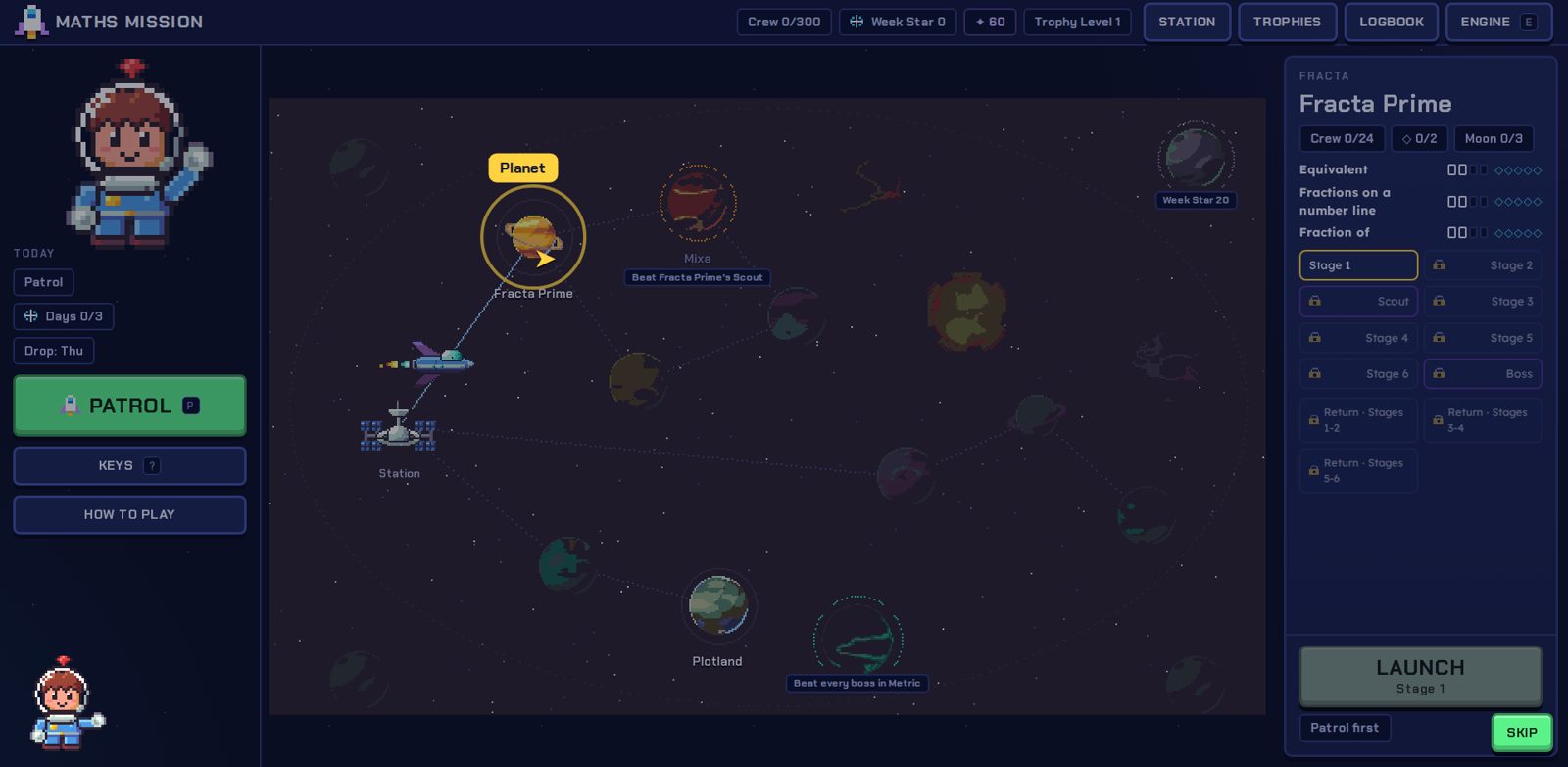
This time he spotted the galaxy map on my screen. He'd seen me working on a mobile puzzle game and a desktop point-and-click life sim in the previous weeks, so he asked, "What are you making? Is it a new game?"
I explained that this one wasn't another of my game projects; it was his. He shoved me out of my office chair with an "I want to sit, let me try," and started clicking around.
I can actually see my character when I do maths? This is so cool, Dad! My school game doesn't let me see my character at all.
He'd told me about that before. He'd earned loads of credits in his school game and bought the best outfits, then had to go into a sub-menu to see his character wearing them. I'd remembered, so I made his space cadet stay on screen where he could enjoy what he'd earned.
After about 15 minutes he told me, "I want it on my computer and on my tablet." That was enough to get me properly stuck into building it, and I think I used a week's Claude allowance in two days, with about ten AI agents working in parallel. It felt worth it.
His report became a galaxy
Once I knew he wanted to play, I had to keep coming back to why I'd started. His school report was the foundation: fractions and decimals were among the areas he hadn't mastered yet, so I made Planet Fracta for those. Measurement became Station Metric, while geometry got Nebula Geo.
That gave me a reason for what went into each place. Fraction Cutter could give him time with the fractions he needed to practise; when I was working on Measuring Lab, I had his measurement results to go back to. Angle Sorter belonged with the geometry he was still learning.
I used England's national curriculum, which is public, so anyone can teach it. I could take that maths and build it into the space world he wanted, with his report helping me decide where to begin. I kept thinking of having a suit made to fit: I'd already got his measurements, in a manner of speaking, so I could make something for him from the start.
Our kind of games
Knowing what he needed to practise still left me with the fun part: working out what he'd want to do when he got there. We play Battleships together, so I brought that into Grid Strike, where the coordinates have a reason to matter to him.
I kept his complaint about the hidden character in mind as I worked on the other games too. I could add Hexanum or Box It, but if he couldn't enjoy what he'd earned, I'd have missed something he cared about. So his maths earns stardust for outfits and ship parts he gets to see while he plays.
I also wanted him to have a choice when he sat down, whether he fancied Triple Match or wanted to try Mirror Builder. With The Lei Shop and Roll & Knock in there as well, I ended up with eleven mini games. I did get a bit carried away.
I'd watched him go after every reward in Astro Bot, which is why I wanted trophies he could earn here too. And remembering Mathlympics made me want somewhere he could stretch himself, so I added Mission Challenges with puzzles that go beyond his everyday questions.
Of course I wanted a big boss for him to beat as well. Those fights take three hits to win, and a wrong answer doesn't hurt him, because I wanted him to keep having a go even when the maths took some working out.
Screens from the game
Grid Strike
Battleships with coordinates, played against Zix.
A boss fight
Counting back in tenths on Planet Fracta. Three hits beat the boss.
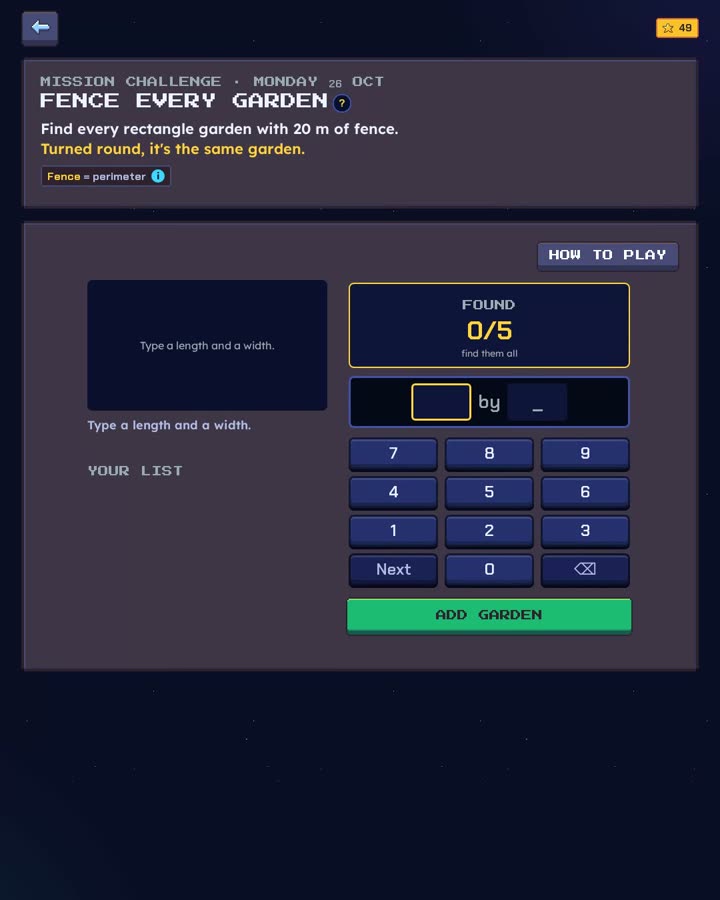
A Mission Challenge
Find every rectangle garden you can fence with 20 metres.
Room to get an answer wrong
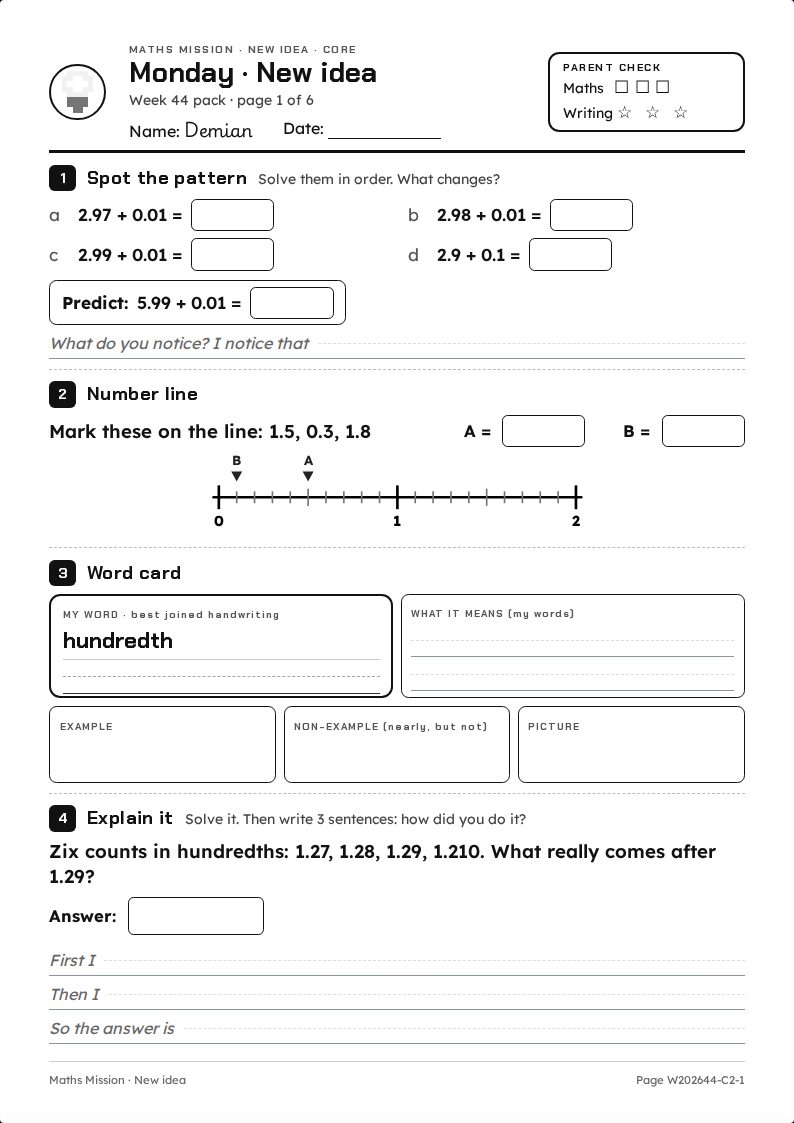
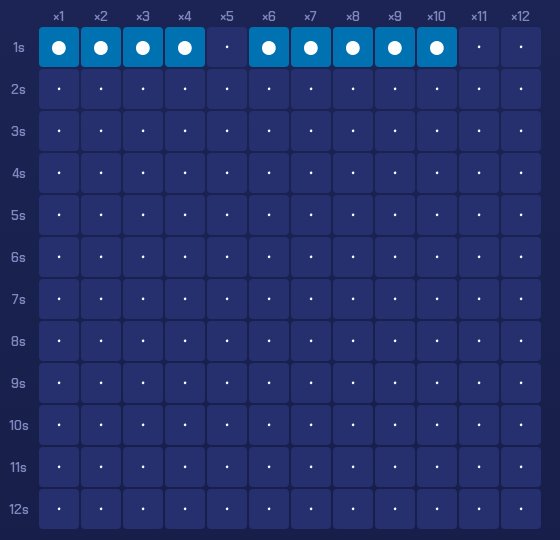
I cared about that just as much as the boss fight itself. When he's flying through the questions, they get harder, and after a miss they ease off a little. I wanted to keep up with what he could do while giving him room to work out something he hadn't learnt yet.
That meant thinking past the first explanation. He can open a hint and follow the worked steps, or try another way of solving the question if the first one hasn't clicked. The number line can zoom in too, for when he needs to look closer at the numbers.
I also needed to see how he was getting on without hovering over him, so I made a parent page behind a PIN where I can check his scores and playing time, and see what's improving. His handwriting hasn't caught up with his understanding yet either, which is why I included printable handwriting pages for us to use away from the screen.
He knows what he's buying
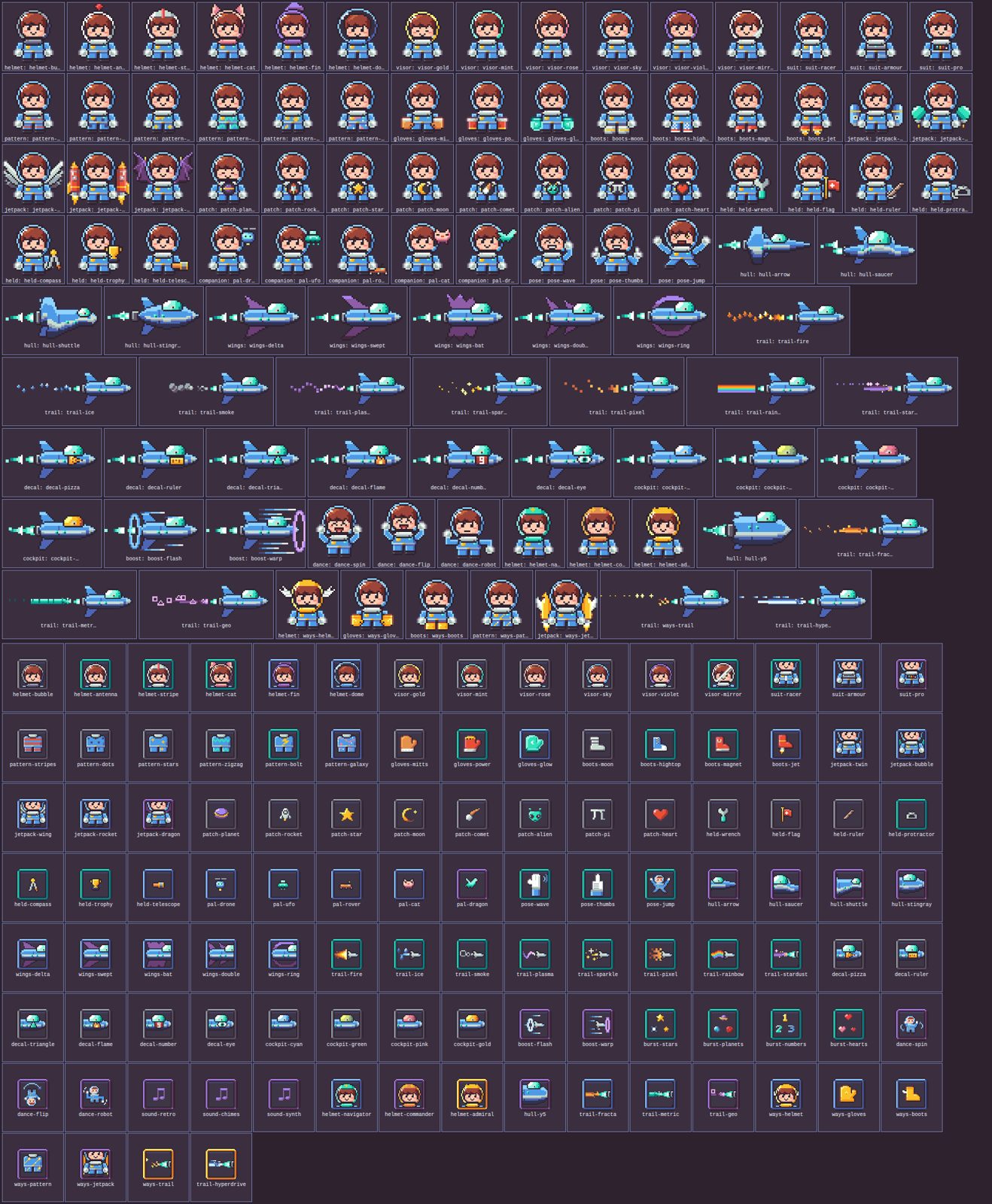
Giving him stardust for his effort meant I had to think carefully about what happened when he spent it. I've seen how excited a child can get about a mystery box, then how disappointed they are when it gives them something they didn't want. I wasn't going to put that into a game I was making for my son.
I left out loot boxes and gacha, along with mystery rewards, and there are no ads. He knows the price of an outfit or a ship part before deciding whether to save up for it. I'd happily work towards a pixel reward myself; I'd be pretty annoyed if I did the work and got something else instead.
You don't go into the grocery store and buy a mystery shopping basket with your hard-earned money.
That was how I thought about his stardust. He'd earned it, so I wanted him to be able to make a proper choice about where it went, and that got me thinking about money outside the game as well.
A lesson I've paid for
I've been in massive debt myself because I thought I deserved to have something straight away. I wanted it, and I wasn't stopping to ask whether I needed it or could afford it. I know how easy it is to turn that feeling into instalments you're still paying long after the excitement has gone.
I'd like Demian to learn that difference while he's 8, with a pretend outfit for a space cadet, before there's a buy-now-pay-later button offering him something expensive. If he wants something he can't afford yet, he can get used to saving for it.
Giving matters to me too, because I grew up feeling I never had enough. Even as an adult, donating can feel like I'm taking something away from myself. My wife and I already encourage him to give away books or clothes he's outgrown, and I wanted that to feel ordinary to him as he grows up.
I came across a psychologist explaining the three-jar idea on YouTube, and it fitted what I was trying to teach him. So the stardust he'd been earning got somewhere else to go besides the shop.
Monday is Jar day
Everything he earns is split between Spend, Save and Give. Give never goes below 10%, a starting point I took from the Torah and the mitzvah, a good deed, of giving a tenth of what you earn to people in need. He can choose to give more, and I want him to have room to discover how that feels.
On Monday, which is Jar day, the Give jar goes to Space Pup Rescue inside the game, with a little animation so he can see it happening. His savings earn weekly interest, including interest on the interest already in there, so leaving them alone gives him something he can watch grow.
He can withdraw from Save whenever he likes, though taking anything out on a day other than Monday means he gets no interest that week. Jar day is also when he can change his split, and I made the screen show the maths behind his choices: putting 30% into Save means saving 3/10, with last week's stardust there to help him see what that amounts to.
I wanted him to have those decisions while the stakes were small. There will always be another shiny thing to buy, and I'd like him to enjoy what he has, including a family who love him, without feeling he's missing something every time he sees something new.
I work for an eight-year-old
Of course, I can put all this thought into the game and still have him come in and tell me what ought to be different. He does that after he plays, along with reporting whatever he's managed to break. Since Goat Simulator, he's been obsessed with breaking games, which has turned out to be quite useful.
The whole look and feel came from him, including the galaxy and the alien. He wanted the spaceship too, and had ideas for the race and the graphics. I take his feedback and make the changes, then ask him to try again and tell me whether that's what he had in mind.
On the way to school I explain how I did something and which problems I had to work through. Our school-run conversations have got a bit more technical, although he seems quite comfortable with the arrangement.
He's more like the CEO here, and I'm the CTO and everything else.
I like that he knows his ideas count. When he tells me something, he gets to see me listen and do something with it, which matters to me well beyond whether we've made a good game.
What I hope stays with him
My own father was abusive and wasn't there for me. He believed respect came from fear, and I know what growing up with that feels like. With Demian, I want to earn his trust by respecting him and being there when he needs me.
When I imagine him at 18, I don't mind if he's forgotten the details of Maths Mission. I hope he remembers that I saw what he cared about and built things with him, and perhaps he'll do the same for his own children one day.
I want him to remember that I was there for him in everything in his life.
I was compared to my cousins when I was young, with my parents pointing out what they could do better than me. That stays with you. Reading Dr Maltz's Psycho-Cybernetics got me thinking about the picture we form of ourselves as children, and I don't want a wrong answer in a maths game to become part of Demian believing he can't do maths.
That's why I care about the explanations and the chance to try again. He's got plenty of ambition already: he told me recently that he'll have more money than Elon Musk when he grows up, and I believe him. That kid is ambitious.
You can make their thing
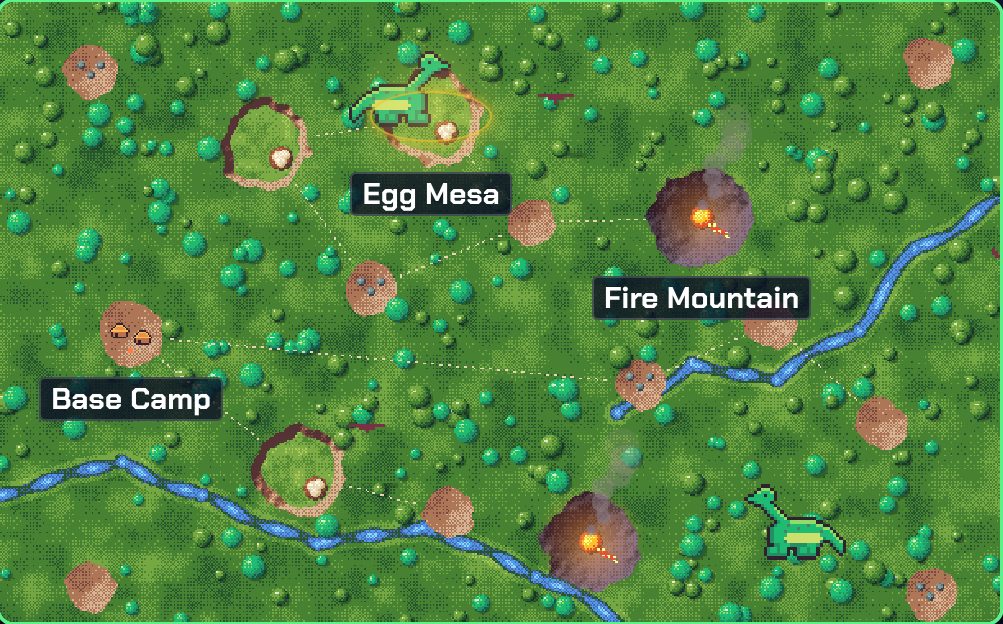
Helping him believe he can make things means being willing to have a go myself. I'm 42, I work in marketing and advertising, and although I know a bit of HTML, CSS and Python, I'm no developer. For this build I had an idea I could explain and a Claude subscription costing me $200 a month.
I started by writing down what I wanted in enough detail for the AI to work with. That's where I'd start if I were making something for another child too: listen to what they find difficult, and pay attention to what makes them want another go.
Demian wanted space. I can imagine a child wanting to do their maths among dinosaurs, or exploring an ocean world; another might have a thing for volcanoes. Those are imagined versions, and you and your child could come up with something I haven't thought of at all.
I'd bring them into making it with you. Let them explain their idea to the AI and see what comes back, then help them change it. You can let it be imperfect while you're working it out together.
I think about it like baking: you can give your child cookies, or bake them together and let them have a hand in what they're eating. Demian and I made a pavlova once and he still talks about it. I'd like him to have a few memories like that from this game too.
I'd start with your child
Seeing how much he cares about something he helped make is why I'd like to do this for other families through my company, Crowork.ai. I'd start with your child's school reports, as I did with Demian, and listen to what they enjoy.
I'll build it free for the first 10 families who ask through the quote form. Mention "first 10" so I know that's what you're asking about; I want to hear what works for your children and what they'd have me change.
If it grows, I'd like to bring in curricula from other countries and offer it to schools and after-school clubs. I'd want it to work on any computer and keep it affordable for parents, with schools and businesses helping fund it so families could cover the running costs. I'm also thinking about making it open source so people could make their own.
I'd like to try multiplayer too, with children competing at their own level. I remember how those comparisons felt growing up, so I'd want someone further ahead to give them something to aspire to while they build confidence in what they can do themselves.
For now, I've got a son who comes into my office with ideas for his game. If you have an idea for your child, I'd like to hear it, and I think you might be surprised by what you can make together.