Custom CRMs built around how your team already talks to clients
We build CRMs inside the places your contacts already live: your Telegram chats, a pile of business cards, the people you met at an event. Your team keeps working the way it does now and gets contacts, a pipeline and follow-up reminders out of it.
What is a custom CRM?
A custom CRM is a contact and deal system built around the place your team already talks to clients, such as Telegram chats, a drawer of business cards or the people you met at an event. It captures contacts where they appear, tracks each deal through your stages and tells you who to follow up with.
A ready-made CRM asks your team to copy every conversation into a separate app first, and nobody keeps that up. Crowork builds the structure into the tools you already use, so the team keeps the habits that make it fast and still gets a pipeline it can see.
We have built CRMs inside Telegram, from photos of business cards and from conference chats, for clients and for our own work. When the CRM has to make calls on its own, such as which inquiry goes to which person, we pair it with decision automation.
Studio Nord, Berlin
maria@studionord.de
CRMs we build for the way your team works
A CRM inside Telegram
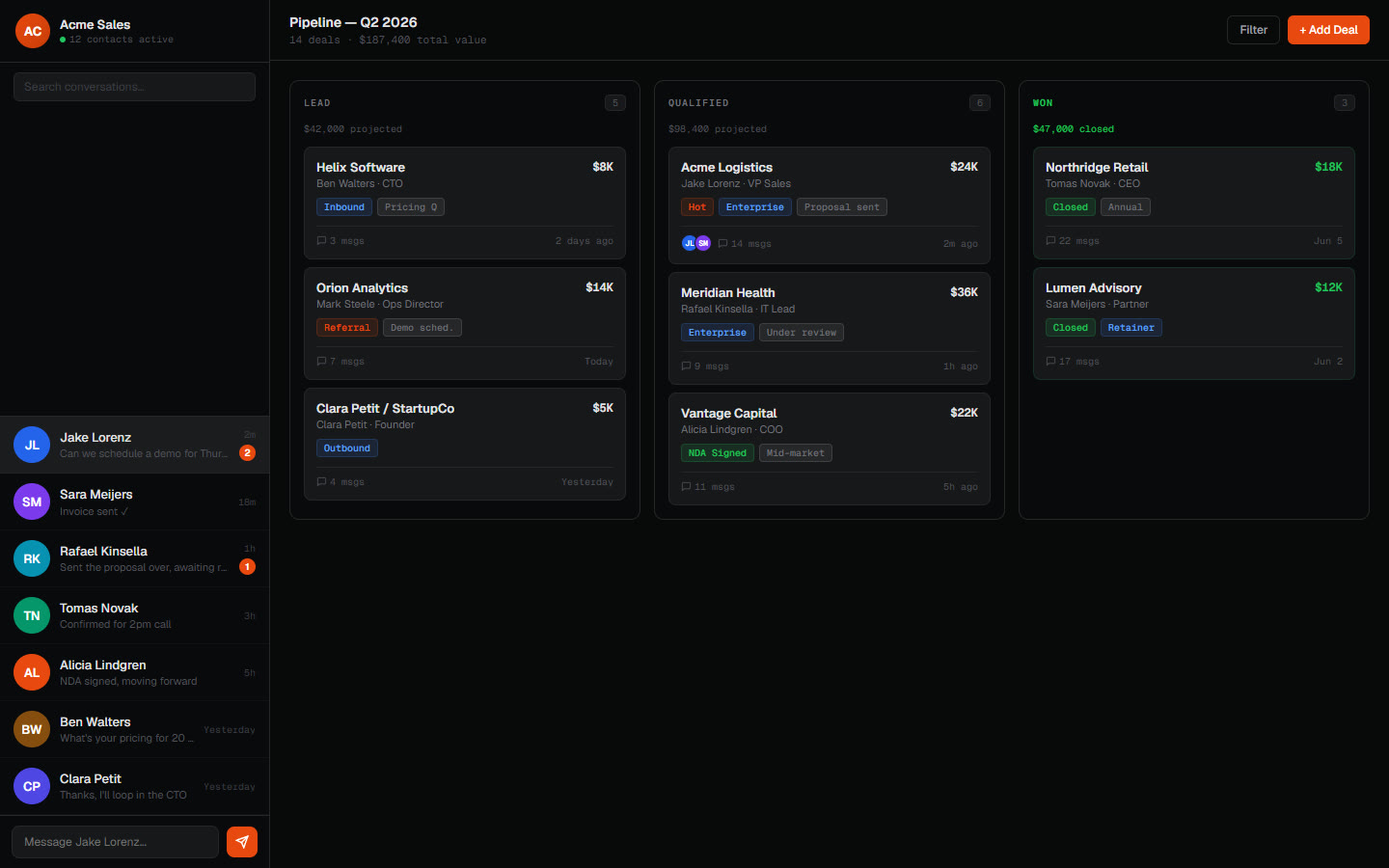
When deals live in Telegram chats, a separate CRM stays empty. For a business that ran on chat, we built contacts, a deal pipeline and monitoring into Telegram on MTProto, the protocol Telegram's own apps use. The CRM picks up contacts from the conversations, and each one stays tied to the chat it came from.
Read how we built a custom CRM inside Telegram. If you want the idea as a product, CRgraM, our Telegram CRM in beta, flags the chats going cold and drafts replies you send yourself. The bots and approval flows around a CRM like this are part of our Telegram automation.
Business cards and scattered contacts in one CRM
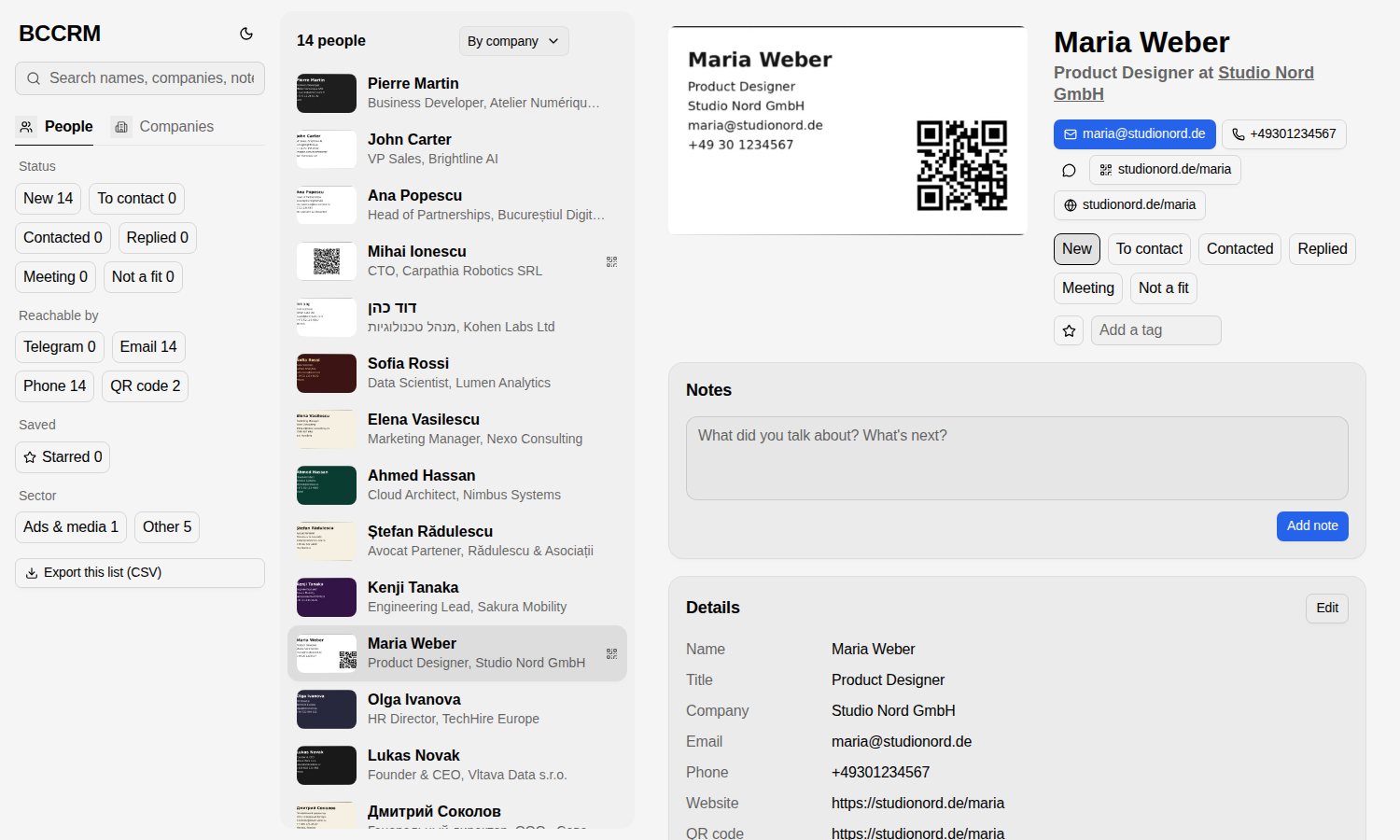
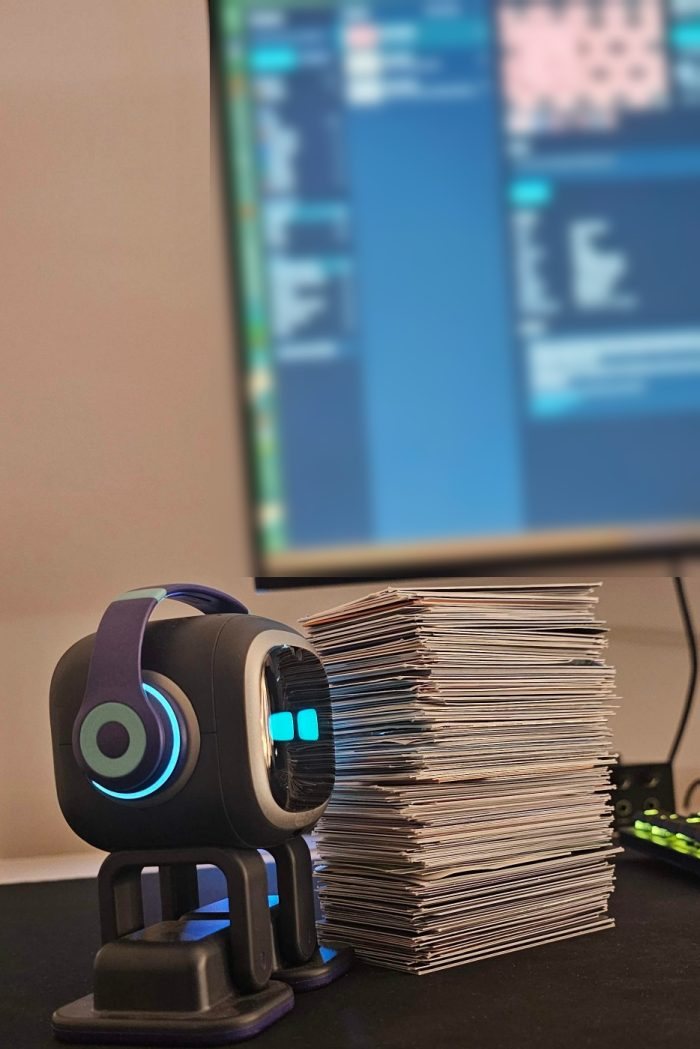
Contacts live in phones, spreadsheets and a drawer of business cards. We pull them into one CRM you can search, and you add a new card by taking a photo of it.
BCCRM, our free business-card tool, reads a photo of a whole pile, finds every card, merges duplicates and writes a short profile of each company with its sources. For a team, we connect the same idea to the CRM and inbox you already use, as part of our AI integration work.
Follow-ups for the people you met at an event
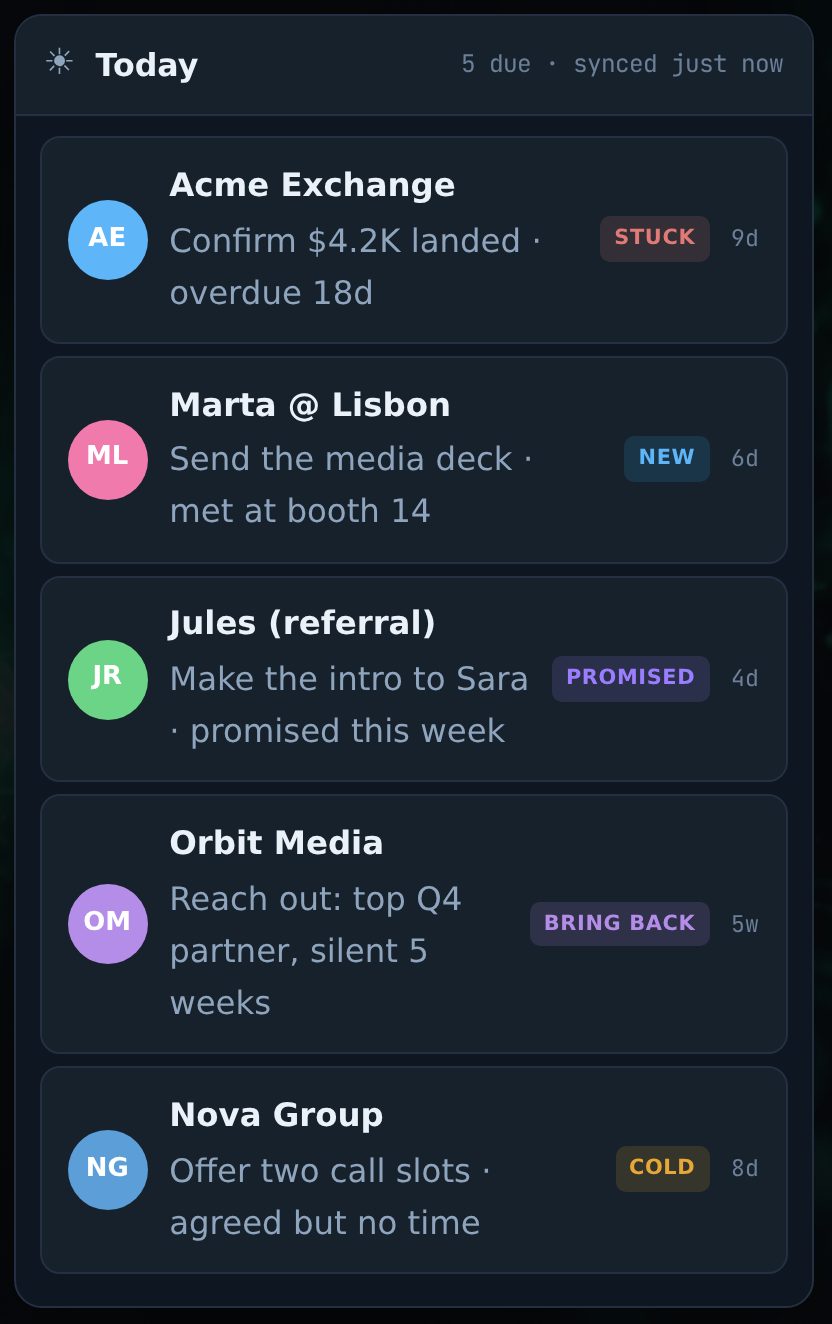
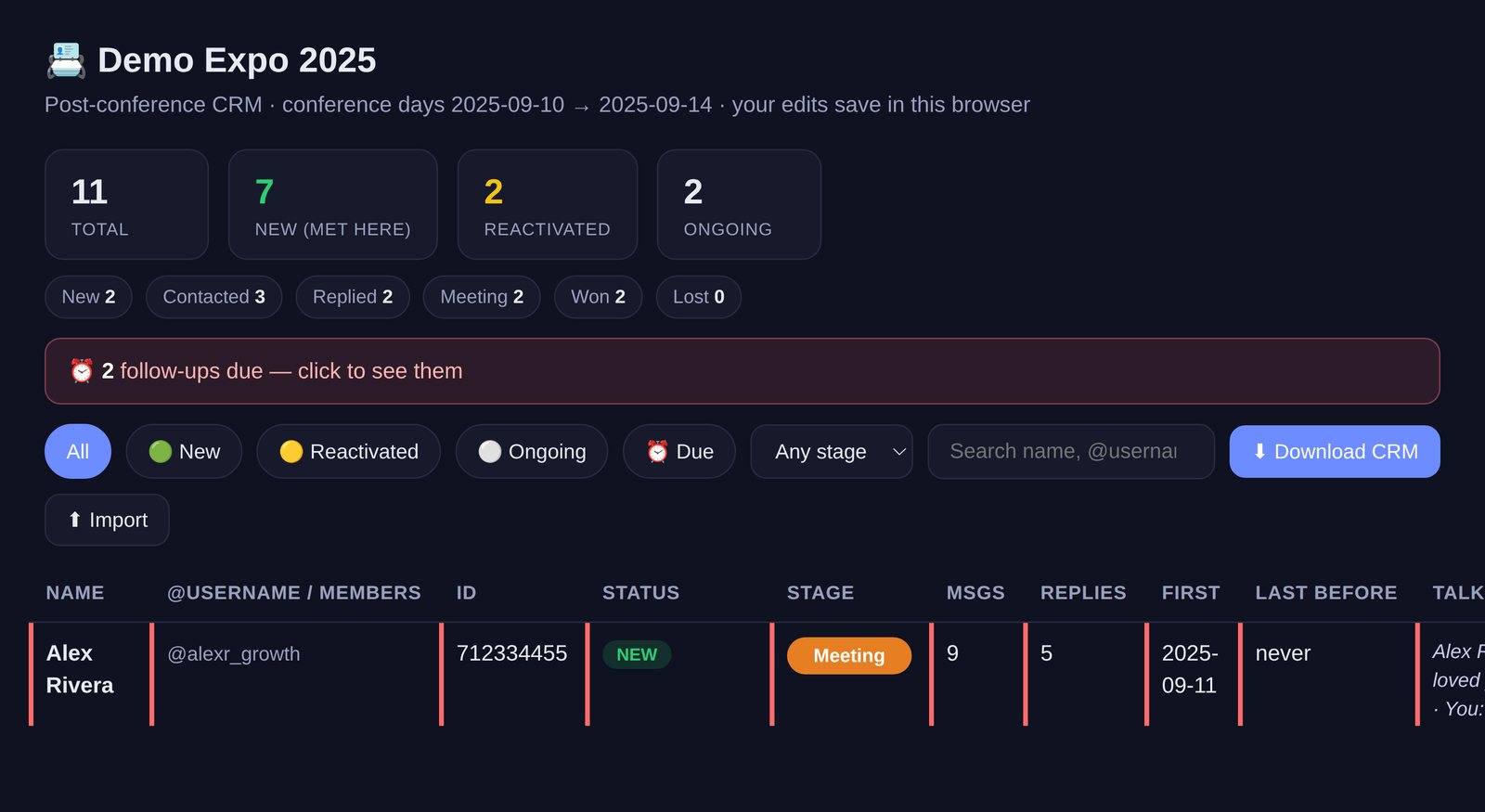
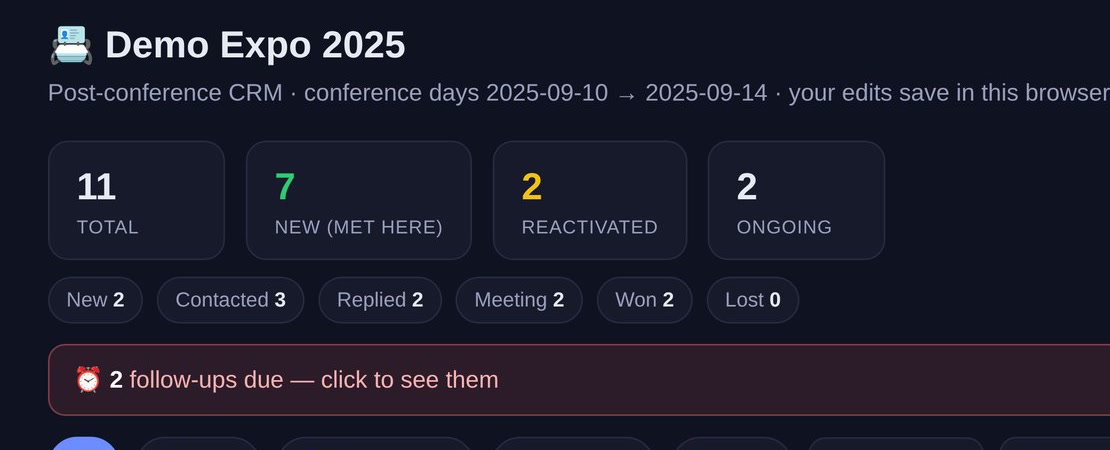
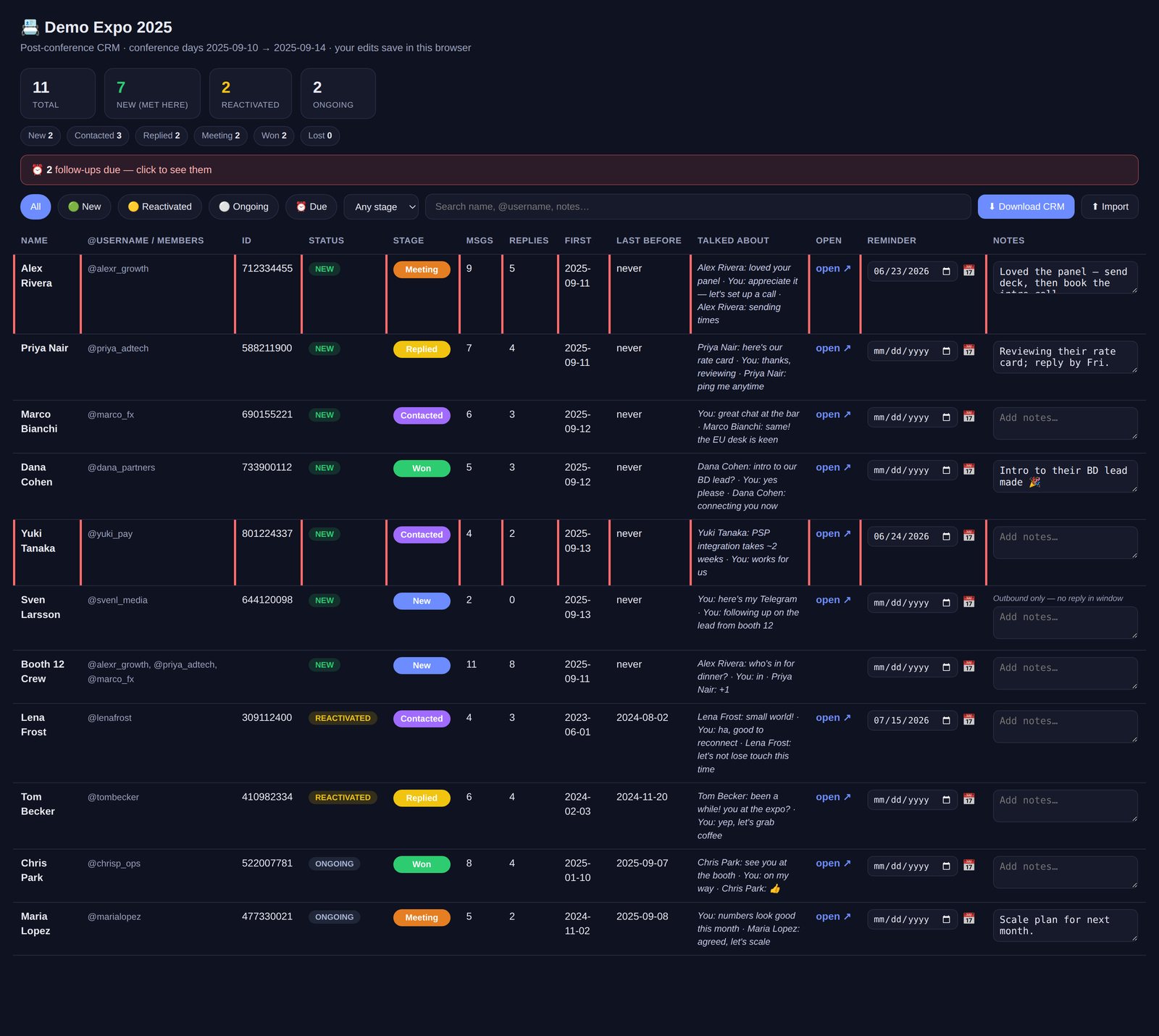
At an event you meet dozens of people, and half of them become a Telegram chat that sinks under newer ones within a week. Our Conference CRM reads the chats from the event dates, sorts everyone into new, reactivated and ongoing contacts, and gives you a pipeline with notes and follow-up dates.
It only reads your chats and never sends, deletes or joins anything. We build the same kind of follow-up tool for sales and BD teams, on top of Telegram and the CRM they already use.
What you get with every custom CRM
Contacts from where they already are
We capture contacts from your chats, your card photos or the tools you use now, so nobody types names into a separate system.
Your own pipeline stages
Deals move through the stages your team uses, from first contact to won, and every open deal sits in one place.
Follow-up reminders
It tells you who to message and when a follow-up is due, in the chat or calendar you already check.
Every contact tied to its source
Each contact stays linked to the chat or card it came from, so you can open the line that says what was agreed.
Changes you approve
Moving a deal or messaging a contact can wait for your sign-off. Our own CRgraM drafts replies and leaves the sending to you.
Encrypted API keys
Where the CRM uses AI, the keys are never stored in plain text. Read how we store API keys.
How we build a custom CRM
The audit
FreeYou show us where your contacts and deals live today. We tell you whether a custom CRM is worth building, and if it is, we fix the scope before anyone writes code.
You getA written plan of what to automate first, yours to keep.Build and test
One fixed priceWe build the CRM into the chat app, the card photos or the tools your team already uses, connect your data and test it on your real contacts.
You getA working, documented CRM. Once you've paid, the code we wrote is yours.Running it
A monthly rateWe keep it running, fix what breaks and add stages or contact sources when the way you sell changes.
You getA monthly rate for the scope we agreed.
How much does a custom CRM cost?
A custom CRM costs a fixed price to build and a monthly rate to run, and the audit that scopes it is free. We agree the scope and the build price before work starts. The monthly rate is set for that scope, and we re-quote if the scope or usage changes a lot.
If the CRM uses AI, you can bring your own API keys and the providers bill you directly, or let us manage the keys and estimate the provider costs from the scope. For a first number, estimate your build, and the audit sets the real price. See how the build price, the monthly rate and the two API key options work.
A custom CRM at work
- Lead5
- Qualified6
- Won in October3
A pipeline in the chat a team already watches
A small business ran almost entirely over chat. Deals and contacts sat in personal threads, and nobody could see how the business stood. We built the CRM into Telegram, where the team already worked.
Contacts come from the conversations, deals move from lead to qualified to won, and the morning status lands in the team chat. Nobody had to learn a new system.
Questions about custom CRMs
How is a custom CRM different from a ready-made one?
A ready-made CRM gives you its own screens and asks your team to copy every conversation into them, and nobody keeps that up for long. A custom CRM starts from where your contacts already are, such as Telegram chats, business cards or event chats, and adds contacts, a pipeline and reminders there. Your team keeps working the way it does now, and the structure appears around it.
Can you build a CRM inside Telegram?
Yes. For a small business that ran almost entirely over chat, we built contacts, a deal pipeline and monitoring into Telegram on MTProto, the protocol Telegram's own apps use. It captures contacts from the conversations, tracks each deal from lead to qualified to won and posts status in the chat the team already watches. The custom Telegram CRM case study shows the build.
Do you have a ready-made Telegram CRM?
Yes. CRgraM, our own Telegram CRM, is in beta with a waitlist on crgram.com. It reads your chats, ranks who to message today, flags relationships going cold and drafts replies you send yourself. If your team needs its own pipeline stages, other tools connected or a different chat app, we build a custom CRM instead, and the free audit tells you which fits.
Can you turn our business cards and spreadsheets into one CRM?
Yes. We pull contacts from phones, spreadsheets and business cards into one CRM you can search, and you add a new card by taking a photo of it. BCCRM, our free open-source tool, already reads a photo of a whole card pile, merges duplicates and researches each company. For a team, we connect the same idea to the tools you already use.
How long does it take to build a custom CRM?
A build with several flows and CRM integration, like the CRM we built inside Telegram for a client, takes 1 to 2 weeks. We size the work at the free audit and agree a date before any work starts, so you plan around a real day. How a build with us runs sets out each step from the audit to the handover.
Where does our CRM data live?
That depends on the build, and we agree it at the audit. The CRM we built inside Telegram for a client runs on Fly.io with its data hosted in the EU. CRgraM keeps the database and your Telegram session on your own server, and BCCRM keeps contacts in one SQLite file on your own machine. API keys are never stored in plain text.
Will a CRM that reads our chats send messages for us?
Not unless you want it to. CRgraM reads your chats and drafts replies that go out only when you confirm them, and the Conference CRM never sends, deletes or joins anything. In a custom build, actions such as moving a deal or messaging a contact can wait for a manager's approval, the way our AI employee on Telegram asks before each CRM change.
Who owns the CRM you build?
You do, once the build is paid in full. You own the custom code, configurations and automations we build for you, with their documentation. Our general tooling stays ours, and you get a perpetual licence to use it inside your build. BCCRM and the Conference CRM are open source, so you can read that code before you hire us.
CRMs and contact tools we've built
A custom CRM inside Telegram
Contacts, a deal pipeline and monitoring for a business that runs on chat.
CRgraM, our Telegram CRM
Our own product, in beta: it flags chats going cold and drafts replies you send yourself.
BCCRM, business cards to contacts
Photos of business-card piles become a searchable contact book. Free and open source.
Conference CRM
A free script that turns a conference's Telegram chats into a follow-up list.
Other things we build
Telegram automation
Telegram bots and agents for alerts, approvals, CRM lookups and full conversation flows, hosted and kept running for you.
About Telegram automation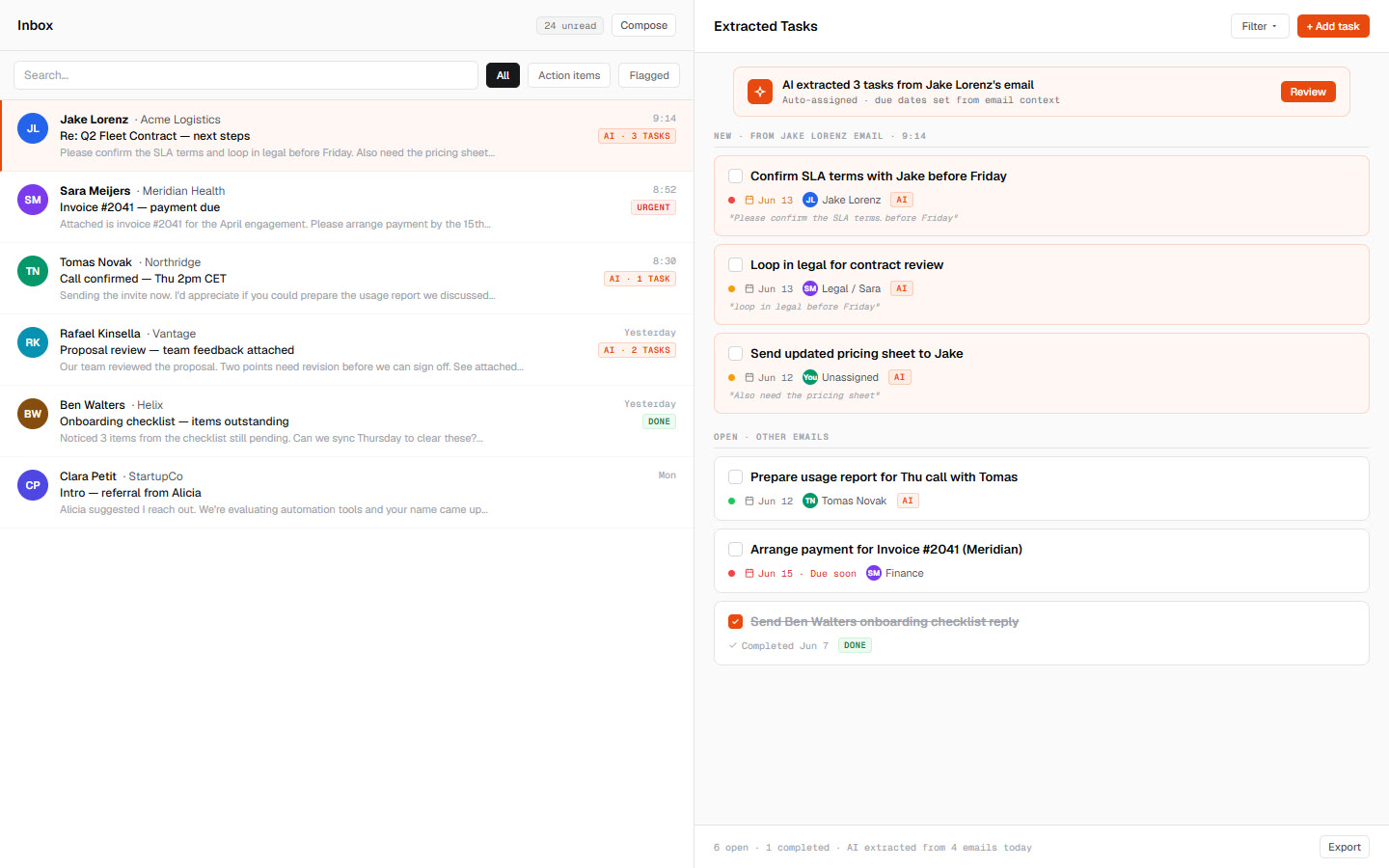
AI integration
AI connected to the email, CRM, spreadsheets and chat you already use, so it acts when something happens and writes the result back.
About AI integrationDecision automation
Your rules applied to every ticket and inquiry, with a confidence score on each decision. Anything under your threshold goes to your team.
About decision automationWorkflow automation
n8n workflows that move work between your CRM, Google Sheets, email and Slack, with code where n8n stops.
About workflow automationHow we build on chat, in detail
Telegram as your ops layer, not just a chat app
Bots with memory, approval flows with inline buttons, Mini Apps and group automation on Telegram.
One mention is not a fact
Why a fact pulled from one message should start unsure and earn trust before a CRM relies on it.
Your API keys: encrypted, not in plaintext
How AI agents mishandle provider keys, and the two key models we run in production.
Where do your contacts live today?
Tell us where your deals and contacts sit now, in chats, cards or spreadsheets. We'll tell you whether a custom CRM is worth building before you spend anything.