Free AI tools we publish on GitHub
We build tools for our own work and publish the ones others can use: CRMs that run on your own machine, a story-card engine, and the memory and self-healing code under our AI systems.
Our public repos
What each tool does
Business cards to a contact book: bccrm
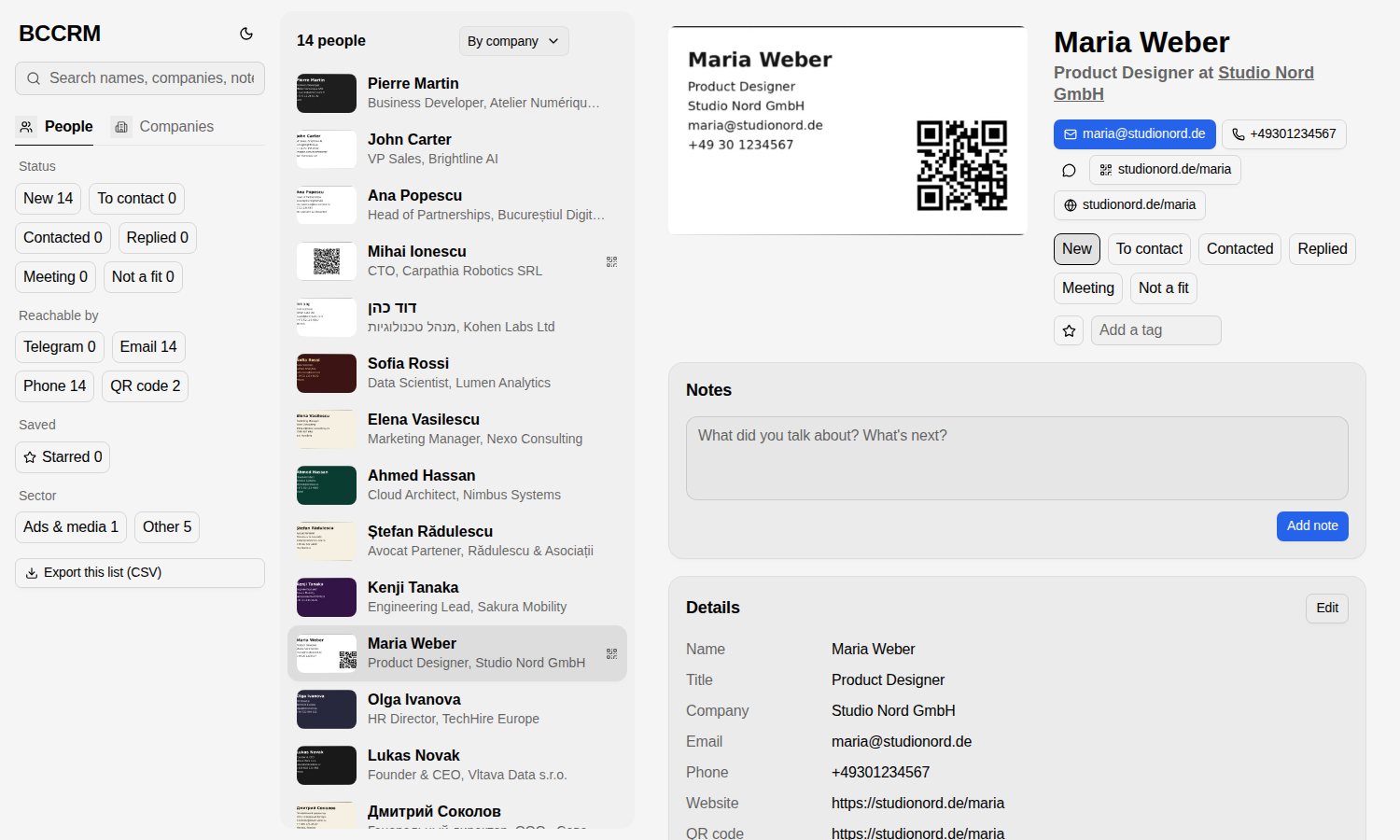
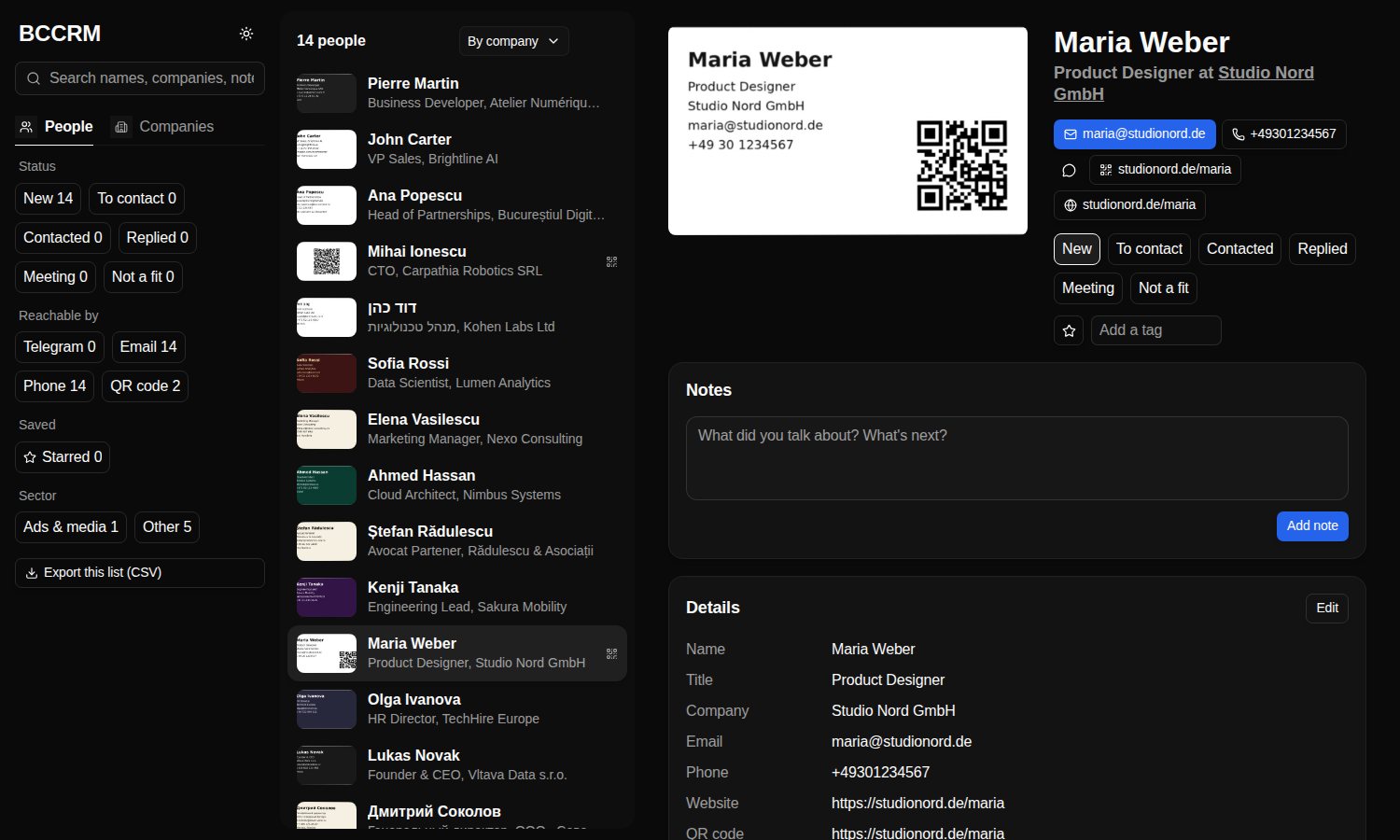
bccrm turns photos of business-card piles into a contact book you can search. It crops each card, reads the fields, follows QR codes, merges duplicates and researches each company on the web, with sources and dates. You get statuses, tags, notes and a CSV export.
It runs on your own machine, on the AI subscription you already have, and it's free under the MIT licence. Read how we built BCCRM. The code and installer are in the bccrm repo.
A follow-up list after an event: telegram-conference-crm
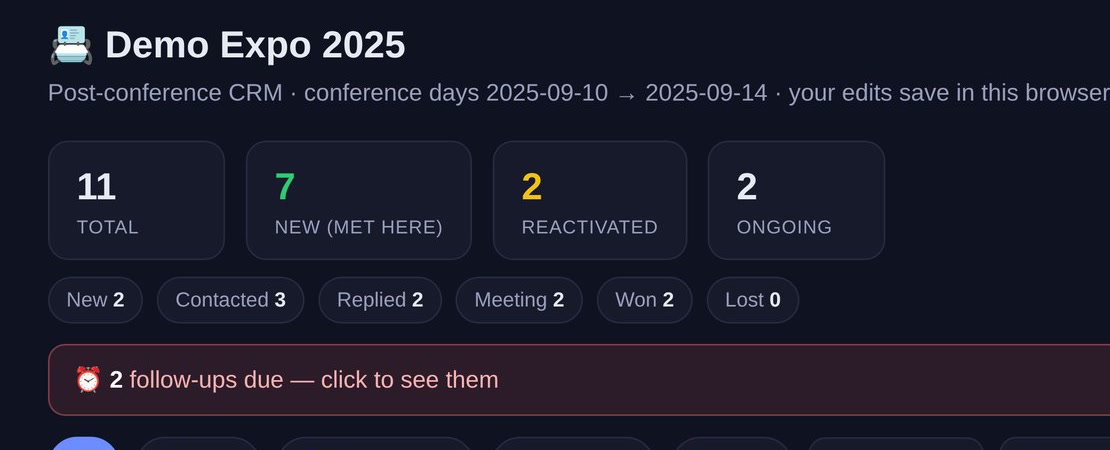
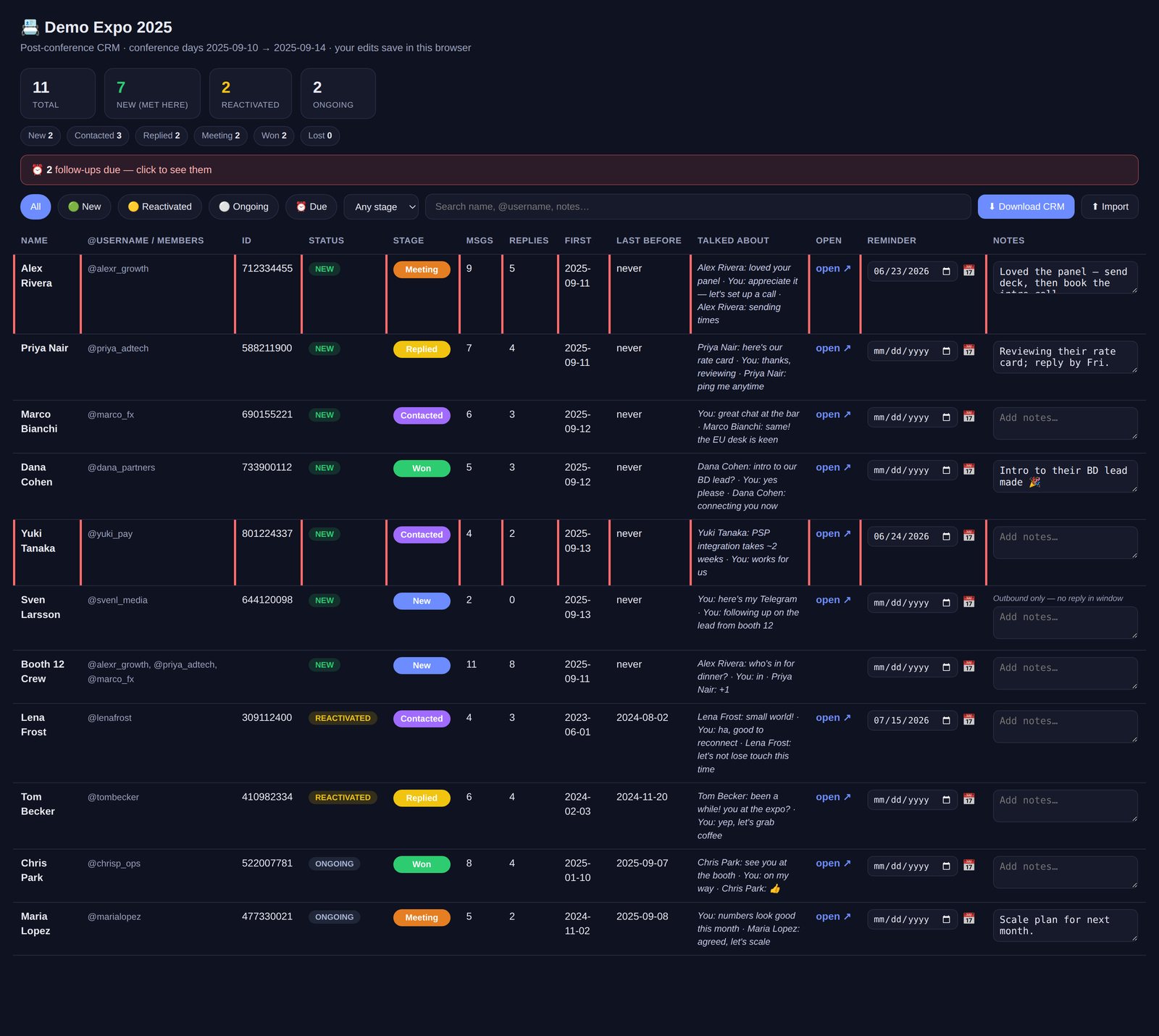
After a conference, the people you met are scattered across your Telegram chats. This script reads the chats from the event's dates and sorts everyone into new contacts, people you reconnected with and ongoing ones, each with a link to the chat and a snippet of what you last talked about.
It's read-only and free under the Apache-2.0 licence. The result is an HTML app with a pipeline and follow-up dates, plus a CSV for Google Sheets or Excel. Read the Conference CRM case study. The code is in the telegram-conference-crm repo.
Branded story cards every day: tg-stories
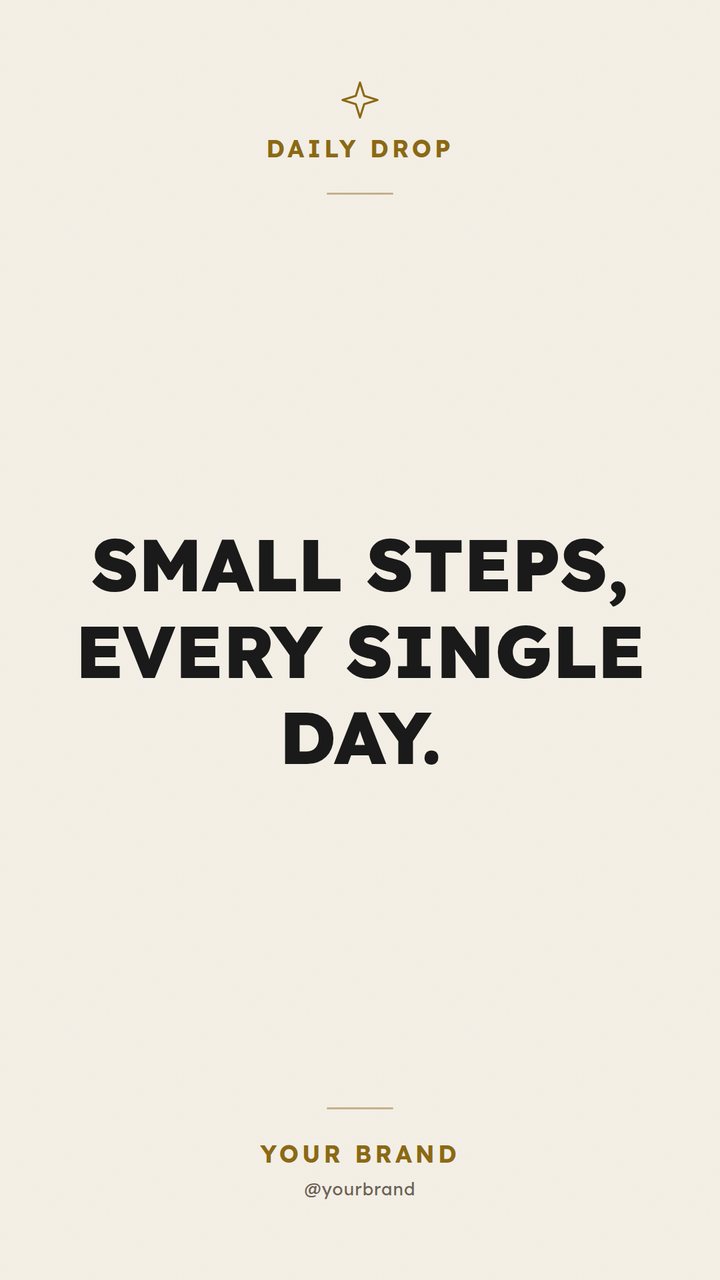
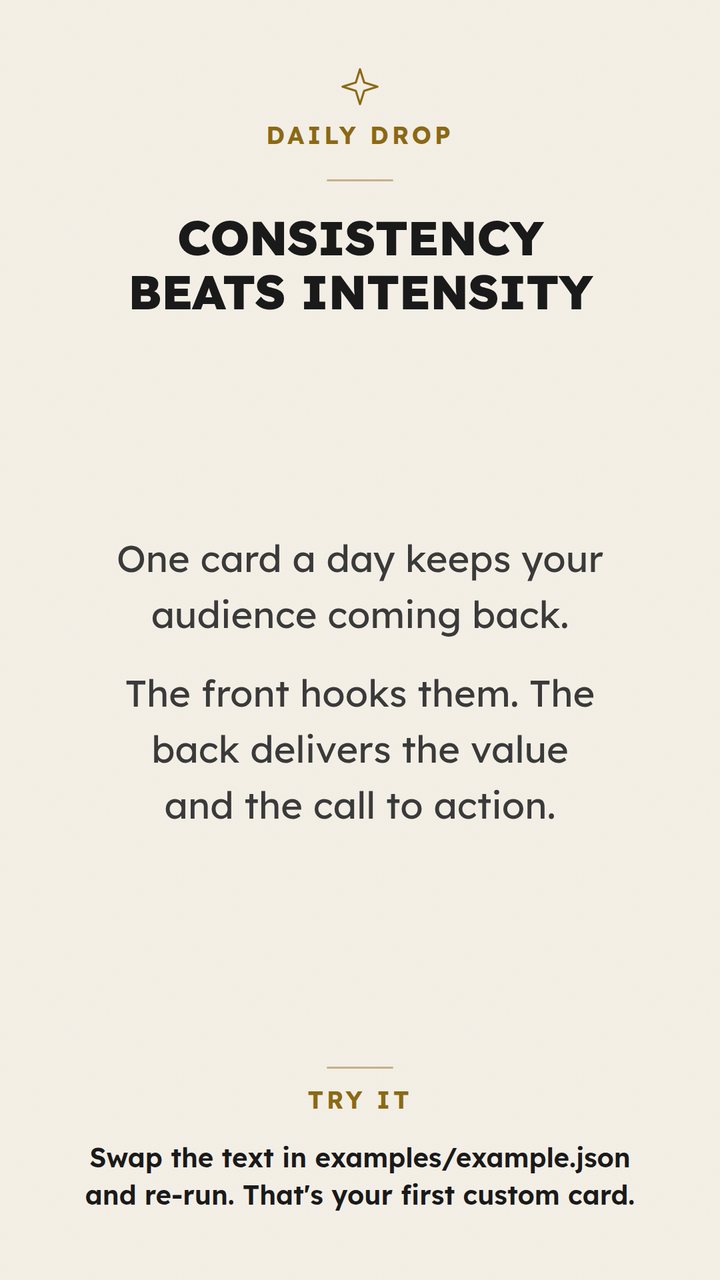
tg-stories renders branded 9:16 story cards from JSON in a headless browser, and a Telegram bot delivers them each day, ready to post as Stories. The same engine makes the stoic cards for Muninn, Kirill's family assistant and our co-founder.
We adjusted and optimised the engine for iREV and sold it to them: the story cards case study tells that story. The engine itself is in the tg-stories repo.

Memory that keeps questions out: speech-act-memory-gate
Most AI memory layers write a user's question down as if it were a fact. This gate classifies the user's message before anything is stored: statements about the speaker get stored, while questions, commands and claims about other people get dropped. A trust model starts each new fact unsure and lets repetition raise it.
It sits in front of the store you already use. We put the same idea to work for a client in the memory reliability case study. The bug itself is explained in why AI memory stores your questions as facts.
An agent that fixes its own bugs: agent-self-improvement
The loop reads the agent's own error log, decides whether a failure comes from code we own, drafts a fix in an isolated worktree and runs the real build plus a replay of the failing messages. Only then does it open a pull request for approval, and it saves the lesson so it doesn't learn it twice.
We walk through every stage in how we made our AI fix its own bugs. The same loop sits under the AI employees we build.
Questions about our free tools
Do I need an API key to run BCCRM?
No. BCCRM runs on the AI subscription you already have: it can use the Claude Code CLI with a Claude subscription, the Codex CLI with a ChatGPT subscription, or any OpenAI-compatible vision API, falling back from one to the next. Everything stays in one SQLite file on your machine, and only the card images and web searches go to the AI you chose.
Does the Conference CRM send messages from my Telegram account?
No. The Conference CRM is read-only: it never sends, deletes or joins anything. In live mode it reads your chats through your own Telegram api_id, and in offline mode it works from a Telegram Desktop export with zero network calls. It gives you an HTML app plus a CSV you can open in Google Sheets or Excel.
Which memory stores does speech-act-memory-gate work with?
speech-act-memory-gate sits in front of the store you already use, such as mem0, Zep or Letta, so you don't replace anything. It classifies the user's raw message and returns store, drop or reinforce, and the integration is a single conditional before your write. Its trust model starts each new fact at a confidence of 0.5, as explained in one mention is not a fact.
Can you set one of these tools up for our business?
Yes. We set up and adapt our open-source tools as part of a build: the memory gate and its trust model, for example, we adapt to your store and your domain. Every engagement starts with a free audit, where we tell you whether one of these tools fits or whether you need a custom AI build instead.
When you want it built for you
AI integration
AI wired into the email, CRM, spreadsheets and chat your team already uses, acting when something happens.
Telegram automation
Bots and agents for notifications, approvals, CRM lookups and full conversation flows.
Launch and brand assets
Launch copy, visuals and a social set made with AI, checked against your brief before anything ships.
Want one of these running in your business?
Tell us what you'd use it for. At a free audit we'll tell you whether one of our tools fits, or what we'd build instead.